
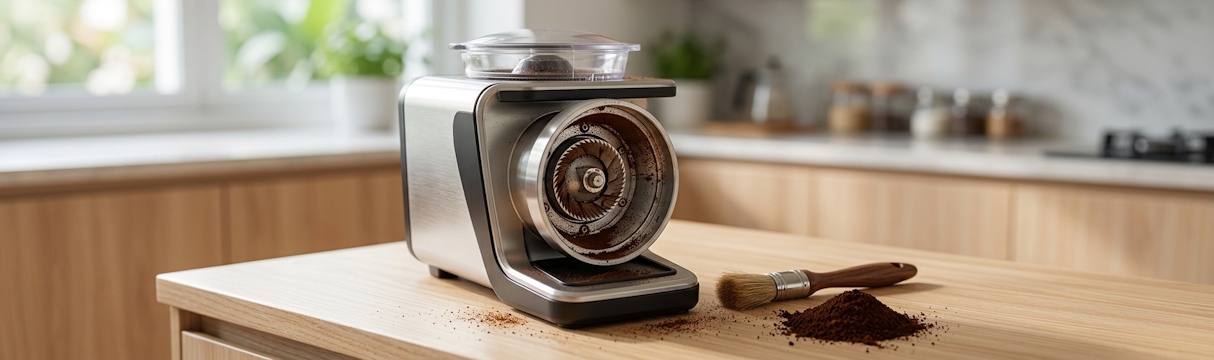
How to clean a coffee grinder depends on whether you have a burr or blade model, but the safest method for most home grinders is a dry brush-and-wipe routine every 2 to 4 weeks, since rice cracks burrs and water causes rust. Grab a grinder cleaning brush or a set of Urnex Grindz tablets before you start. Both take about two minutes to use and neither requires taking the whole machine apart.
Most guides treat how to clean a coffee grinder as one universal process. It isn’t. A blade grinder and a burr grinder are built differently, and the wrong method on the wrong machine is how people crack burrs, strip threads, or void a warranty over a $12 bag of rice.
This guide splits the steps by grinder type, names the specific mistake that does the most damage, and covers the exact models we’ve verified on this site (Baratza Encore, Cuisinart, KRUPS) if you own one of those.
If all you want is the frequency question answered, the short version lives in the recap section further down. Everything above that is the actual how-to, broken into whichever path matches your grinder.
What’s Covered
- Tools You’ll Need
- Signs Your Grinder Needs Cleaning
- Do Burr and Blade Grinders Clean the Same Way?
- How to Clean a Blade Coffee Grinder
- How to Clean a Burr Coffee Grinder
- How to Clean Baratza Encore
- How to Clean a Cuisinart Coffee Grinder
- How to Clean a KRUPS Coffee Grinder
- What’s the Biggest Mistake When Cleaning a Burr Grinder?
- Other Mistakes to Avoid
- How Often Does This Actually Need to Happen?
- FAQ
- Final Verdict
Tools You’ll Need
Before you get into how to clean a coffee grinder step by step, gather these two tools. You don’t need a full cleaning kit for any of this. Two things cover almost every situation: a stiff-bristled brush for the quick, in-between-uses clean, and a cleaning tablet product for the monthly deep clean that dissolves oils without disassembly.
We checked roughly fifteen competing grinder brushes on Amazon by review count before landing on the pick below, and cross-checked the tablets against the site’s existing verified product.

| Coffee Grinder Cleaning Brush | |
| Price | $5.55 |
| Rating | 4.5★ (1,963 ratings) |
| Badge | Amazon’s Choice |
| Bought/Mo | Not disclosed |
| Buy | Check Price |
| Urnex Grindz Cleaning Tablets (430g) | |
| Price | $19.99 |
| Rating | 4.7★ (5,756 ratings) |
| Badge | None |
| Bought/Mo | Not disclosed |
| Buy | Check Price |
The brush handles daily maintenance. The tablets handle the deeper monthly clean where oils have actually built up inside the burr chamber or hopper. Neither replaces the other, and using both together is the routine the rest of this guide is built around.
Free delivery available with Amazon Prime
Signs Your Grinder Needs Cleaning
You don’t have to wait for a calendar reminder to run through the how to clean a coffee grinder steps below. A few physical signs tell you it’s time before your coffee even tastes off.
- A musty smell when you open the hopper, which means old oils have gone rancid inside the chamber.
- Visible oily residue on the inside of the hopper or around the burrs, often feeling slightly sticky to the touch.
- Inconsistent grind size from one batch to the next, a common symptom of static buildup pinning grounds to the burr surfaces.
- Flat or bitter coffee even when you haven’t changed beans, roast, or brew method.
- Louder or slower operation than usual, which can mean packed grounds are working against the motor.
Any one of these is reason enough to run through the how to clean a coffee grinder steps below, even if it hasn’t been a full month since the last clean.
Do Burr and Blade Grinders Clean the Same Way?
A blade grinder chops beans with two spinning blades, the same basic mechanism as a small food processor. There’s little to take apart, and the bowl is one solid piece with nothing that lifts out for separate cleaning. A burr grinder crushes beans between two abrasive discs (the burrs) set at a fixed gap, and those burrs come out for cleaning on almost every model built for home use.
That mechanical difference is the entire reason how to clean a coffee grinder splits into two separate paths instead of one. A method that’s completely safe on a blade grinder, like running dry rice through the mechanism, can chip or jam a burr grinder’s precision-machined surfaces. The reverse is also true: the slow, methodical burr-removal process below would be overkill on a blade grinder that has no burrs to remove in the first place.
If you’re not sure which one you have, check the hopper. A blade grinder’s chamber is a single open bowl with blades visible at the bottom, similar to a mini food processor. A burr grinder has a dial or collar for adjusting grind coarseness, sitting above a two-piece mechanism you can usually twist and lift out by hand, no tools required on most consumer models.
How to Clean a Blade Coffee Grinder
Blade grinders are the easier of the two, and they’re the one case in how to clean a coffee grinder where the rice trick genuinely works as intended.
- Unplug it and empty out any leftover beans or grounds from the bowl.
- Fill the bowl with a quarter cup of dry, uncooked rice, enough to cover the blades.
- Run the grinder for 30 to 60 seconds, until the rice turns to a fine powder.
- Dump the powder out and repeat once more if the grinder still smells or looks oily inside.
- Wipe the bowl, lid, and blades with a barely damp cloth, then dry it fully before the next use.
The rice absorbs trapped coffee oils and knocks loose stuck grounds without adding any liquid to the mechanism, which is why it’s the standard recommendation across most coffee and appliance sites for this grinder type specifically. A cleaning brush handles the same job for lighter, more frequent touch-ups between rice cleans, especially around the lid seam and the base of the blades where fine dust tends to collect and pack down over time.
Let the bowl and blades air-dry completely before you put the lid back on. Sealing in even a small amount of trapped moisture is one of the more common reasons a blade grinder starts to smell musty a few weeks after what seemed like a thorough clean.
How to Clean a Burr Coffee Grinder
How to clean a burr coffee grinder takes a few more steps than a blade model, but none of them are difficult once you’ve done it the first time and know the order.
- Unplug the grinder and empty the hopper completely, including any beans still sitting in the chute below it.
- Remove the hopper and any detachable plastic or rubber parts, then hand-wash them in warm soapy water and dry each piece with a microfiber cloth.
- Take out the inner burr, twisting the adjustment collar to its coarsest setting first so it releases cleanly. Some models need a small screwdriver for this step, so check your manual before forcing anything.
- Brush both burr surfaces with a stiff-bristled brush, working into the ridges and grooves where fine grounds collect and compact over time.
- Wipe the burrs and housing with a barely damp cloth. Never submerge the burrs or motor housing in water, since trapped moisture leads directly to rust on the metal surfaces.
- Reassemble once everything is fully dry, then grind a small batch of cheap beans and discard them, which clears any last residue before your next real brew.
Once a month or so, skip the full teardown and run a scoop of Urnex Grindz through the hopper instead. It’s a food-safe tablet that absorbs oils and loosens grounds as it grinds down, and it’s genuinely faster than pulling the burrs every single time you notice a little buildup.
A vacuum with a narrow hose attachment is worth having on hand too, mainly for pulling loosened grounds out of tight spots a brush can’t reach, like the chute connecting the burr chamber to the grounds bin.
None of this takes long once it’s routine. The first full clean on a burr grinder usually runs ten to fifteen minutes simply because everything is unfamiliar. By the third or fourth time, most people are done in five minutes or less, since the parts are already familiar and the process stops requiring the manual.
How to Clean Baratza Encore
How to clean baratza encore follows the same burr steps above almost exactly, with one shortcut worth knowing. Baratza sells a genuine grinder brush sized specifically for the Encore’s burr chamber, though a standard coffee grinder cleaning brush works just as well for most people. The hopper twists off without tools, and the upper burr lifts straight out once the grind-adjustment collar is turned to its widest setting.
One detail specific to this model: Baratza sells replacement burr sets separately, so if you notice grind quality declining even after a thorough clean, worn burrs (not buildup) are the more likely culprit at that point. We’ve verified the Baratza Encore ESP directly on this site if you’re comparing it against other burr grinders before buying. Anyone searching how to clean baratza encore specifically can skip the general burr steps above and follow this section instead.
How to Clean a Cuisinart Coffee Grinder
How to clean a cuisinart coffee grinder looks slightly different if you own the DBM-8, since it’s a flat-disc grinder rather than a conical burr. The disc lifts out from the top after removing the hopper, and it responds well to a stiff brush worked flat across the disc surface rather than pushed into ridges the way you would on a conical burr.
Skip the rice trick here too. It’s a disc-burr hybrid mechanism, not a true blade grinder, and Cuisinart’s own manual doesn’t list rice as an approved cleaning method for this product line.
Stick with the brush-and-wipe routine, and reach for cleaning tablets if you notice oil buildup between full cleans. That’s the full answer to how to clean a cuisinart coffee grinder for the DBM-8 specifically.
How to Clean a KRUPS Coffee Grinder
How to clean a krups coffee grinder follows the standard burr routine described above, with a simple removable stainless burr chamber that lifts out after twisting the top collar counterclockwise. The KRUPS Precision’s plastic hopper is dishwasher-safe on the top rack, according to its own product manual, which saves a step compared to hand-washing every part after each deep clean.
An OXO Brew Conical Burr grinder and a Breville grinder both use a similar lift-out burr design, so the same brushing method described in the burr section applies if you own either of those instead of a Krups. The main variable across brands is how the burr collar releases, not the cleaning method itself. If how to clean a krups coffee grinder is specifically what brought you here, the steps above are the complete process for every model in the Precision line.
What’s the Biggest Mistake When Cleaning a Burr Grinder?
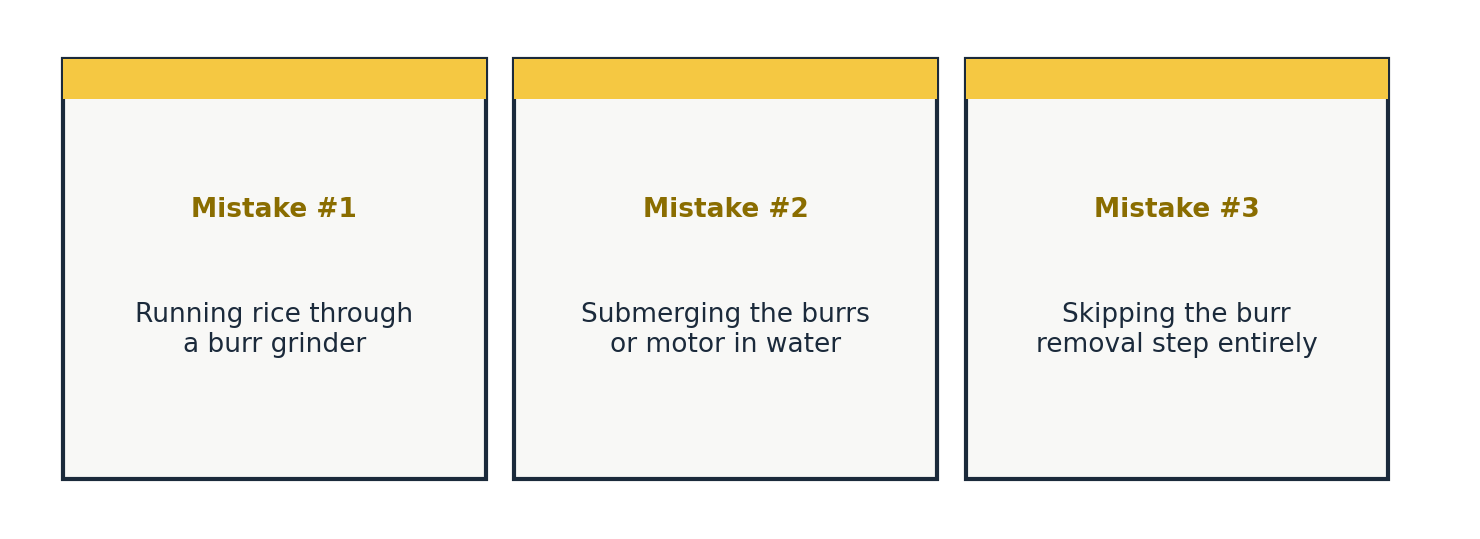
The single most common mistake in how to clean a coffee grinder searches is applying the blade-grinder rice trick to a burr grinder. Coffee Project New York co-founder Kaleena Teoh warns against this in America’s Test Kitchen’s coverage of the topic: rice residue can jam the mechanism, chip the burr surfaces, and in some cases damage the motor outright. Many grinder manuals also treat rice as an unapproved cleaning method, which can void the warranty if something does go wrong later.
Oil buildup isn’t the only issue rice can’t fix, either. Joe Coffee Company retail training manager Cara Mitchell points to a separate problem: static buildup inside a burr grinder pins fine grounds to the burr surfaces, throwing off grind consistency from batch to batch regardless of how clean the oils are.
A brush and a dry cloth clear both oils and static. Rice, even on the one grinder type where it’s safe, only ever addressed the oils.
If you’ve already run rice through a burr grinder once and nothing seems obviously broken, you likely got lucky. It’s still worth switching to a brush and tablets going forward rather than treating one clean run as proof the method is safe for that machine.
Other Mistakes to Avoid
A few smaller habits cause almost as much damage as the rice mistake above, just more slowly and less dramatically. These matter whether you’re following the blade steps or how to clean a burr coffee grinder specifically, since most of them apply to both grinder types.
- Running water over the burrs or motor housing. Both KitchenAid’s cleaning guide and Lowe’s call this out specifically, since trapped moisture leads to rust on the metal burr surfaces within weeks.
- Reassembling while damp. Parts need to air-dry completely before going back together, or moisture gets sealed inside the housing where it can’t evaporate.
- Skipping burr removal and only wiping the hopper. Fine grounds collect underneath the burr itself, and a surface wipe never reaches them no matter how thorough it looks.
- Ignoring the smell. A musty or stale smell almost always means old oils have gone rancid inside the chamber, not that something’s wrong with your beans or water.
- Soap on the burrs. Residue can transfer a soapy taste into your next several batches of coffee if it isn’t rinsed and dried completely.
How Often Does This Actually Need to Happen?
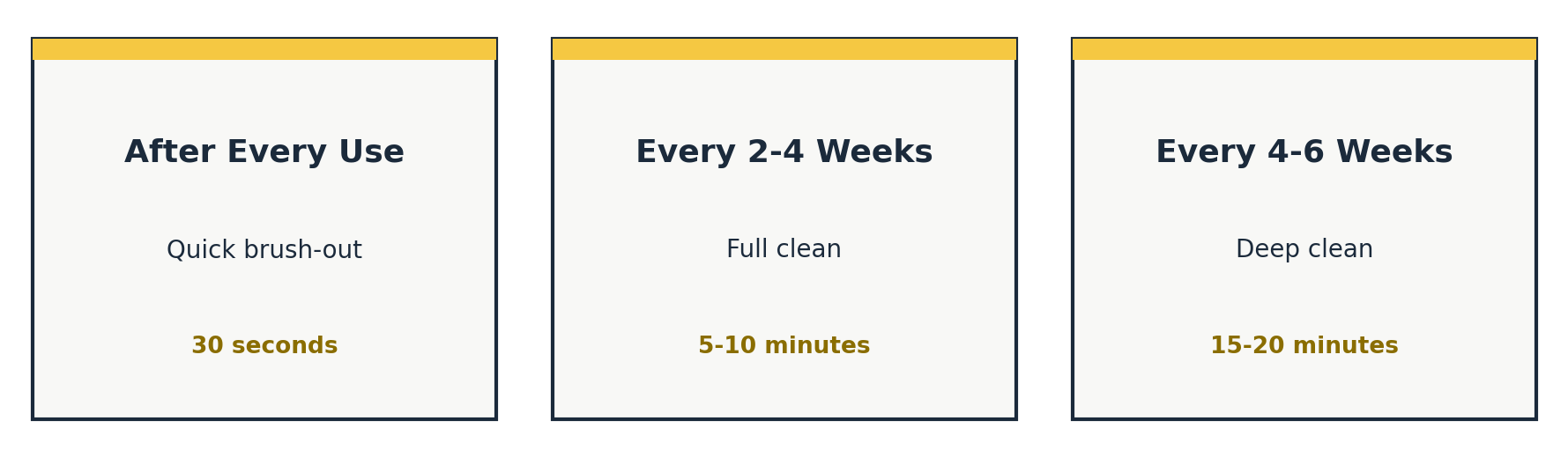
The steps above cover the “how” side of how to clean a coffee grinder, but the “how often” question has its own full answer, including how roast type and usage frequency change the schedule, in our dedicated guide to how often to clean a coffee grinder. The short version: brush after every use, do a full clean every 2 to 4 weeks, and a deep clean every 4 to 6 weeks if you grind dark, oily beans daily.
Light or occasional users can usually stretch that deep-clean interval closer to 6 weeks without any real downside. If you’re grinding for a household of multiple coffee drinkers every single day, lean toward the shorter end of every range mentioned here instead.
Either way, the actual how to clean a coffee grinder process doesn’t change based on frequency. Only the calendar does.
FAQ
A few questions come up constantly around how to clean a coffee grinder, so here are direct answers to the three most common ones.
How often should you clean a coffee grinder?
Wipe out loose grounds after every use, do a full clean every 2 to 4 weeks, and a deeper strip-down every 4 to 6 weeks if you grind dark, oily beans daily.
- Light, occasional use: every 4 to 6 weeks is usually enough
- Daily use, medium roast: every 2 to 4 weeks
- Dark, oily beans daily: closer to every 2 weeks
Can you use rice to clean a coffee grinder?
Rice works safely on blade grinders, but it’s risky on burr grinders, where it can chip the burrs, jam the mechanism, or void the warranty, according to America’s Test Kitchen’s interviews with coffee industry professionals.
- Blade grinder: rice is a safe, effective standard method
- Burr grinder: use a brush or cleaning tablets instead, never rice
Why does my coffee grinder smell or taste stale?
A stale smell or off-flavor almost always means old coffee oils have built up inside the grinder and turned rancid, and a single cleaning cycle usually clears it completely.
- Quick fix: a cleaning tablet cycle, no disassembly needed
- Lasting fix: a full burr or blade clean plus regular brush touch-ups
Final Verdict
Figure out which type of grinder you have before you touch it. That single decision determines whether rice is a fine idea or an expensive mistake, and it’s the one step every guide to how to clean a coffee grinder should lead with but often buries halfway down the page instead.
Blade grinders are forgiving and fast to clean, start to finish in under two minutes with a bag of rice you already have in the pantry. Burr grinders take a few extra minutes and a proper brush, but they reward that effort with a more consistent grind for years longer than a neglected one. Keep a cleaning brush next to the grinder for quick touch-ups, and a box of Urnex Grindz on hand for the monthly deep clean, and you’ll rarely need a full teardown at all.
As an Amazon Associate, we earn from qualifying purchases. Prices and availability are accurate as of the date verified and may change.