
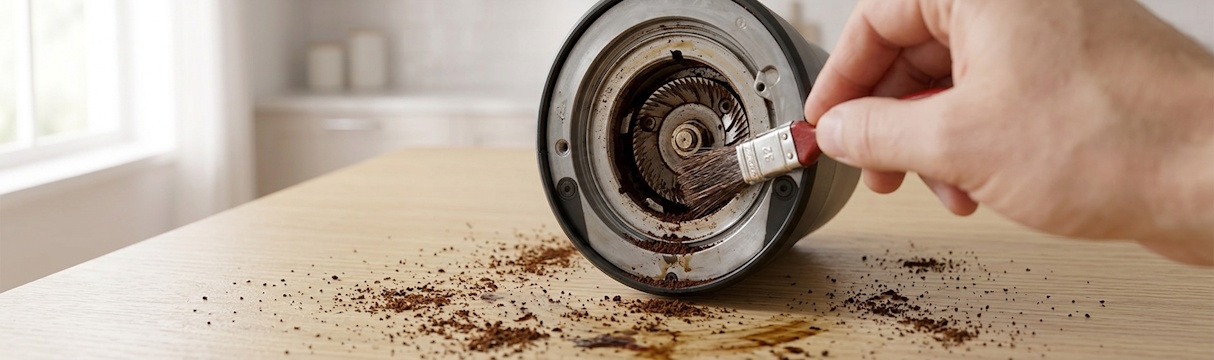
How often to clean coffee grinder maintenance comes down to one factor: oil buildup, not the calendar. Daily grinders need a deep clean every 2 weeks; occasional users can stretch to once a month. Grind daily with a burr grinder like the Baratza Encore ESP and skip cleaning for a couple months, and you’ll taste it before you see it: a flat, slightly rancid edge that no amount of fresh beans can fix.
Most people treat grinder cleaning like they treat their car’s oil light: something to deal with once it’s obviously overdue. That’s the critical mistake. Coffee oils start oxidizing the moment they hit air, and they coat your burrs long before you’d ever notice a visible residue.
By the time your grinder looks dirty, it’s already been tasting dirty for weeks.
Table of Contents
- How Often to Clean Coffee Grinder: The Real Answer
- The Critical Mistake: Judging by Looks, Not Oil
- How to Clean a Burr Coffee Grinder
- How to Clean Baratza Encore
- How to Clean a Cuisinart Coffee Grinder
- How to Clean a KRUPS Coffee Grinder
- Cleaning Tools Worth Keeping On Hand
- Does Your Brew Method Change the Schedule?
- Quick Recap
- Frequently Asked Questions
- Final Verdict
How Often to Clean Coffee Grinder: The Real Answer
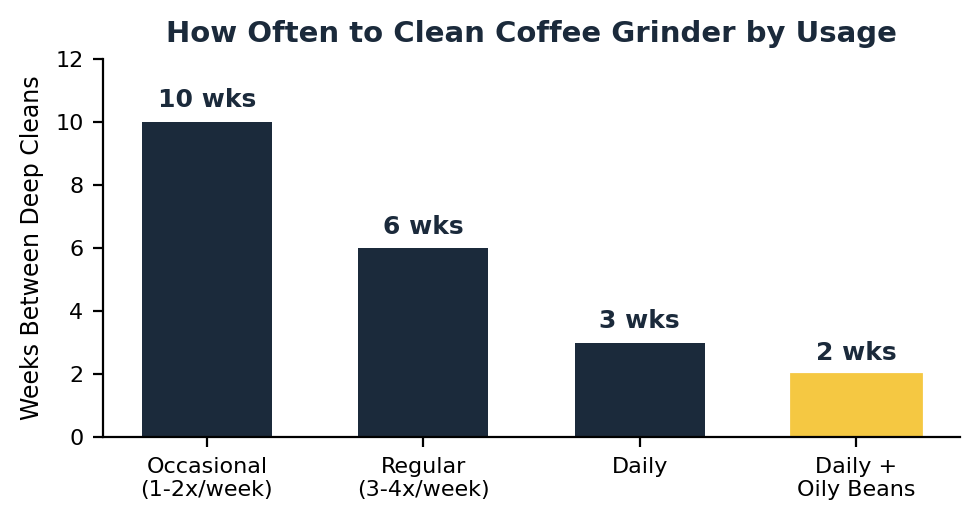
How often to clean coffee grinder units need it depends on three things: how much you grind, what roast you buy, and whether you’re using a burr or blade mechanism. As a working baseline, grind daily and you’re looking at a deep clean every 2 to 3 weeks.
Grind three or four times a week, stretch that to about 6 weeks. Occasional users, once every week or two of grinding, can go 8 to 10 weeks between deep cleans without a flavor penalty.
Blade grinders and burr grinders don’t age the same way either. A blade grinder chops beans between two spinning blades, so oils and fine particles coat a smaller, simpler surface and rinse or brush out fast. A burr grinder crushes beans between two abrasive surfaces set close together, which grinds more evenly but also gives oil and static far more surface area to cling to.
If you upgraded from a blade grinder to a burr model recently, expect to clean more often than you’re used to, not less, despite the better coffee it produces.
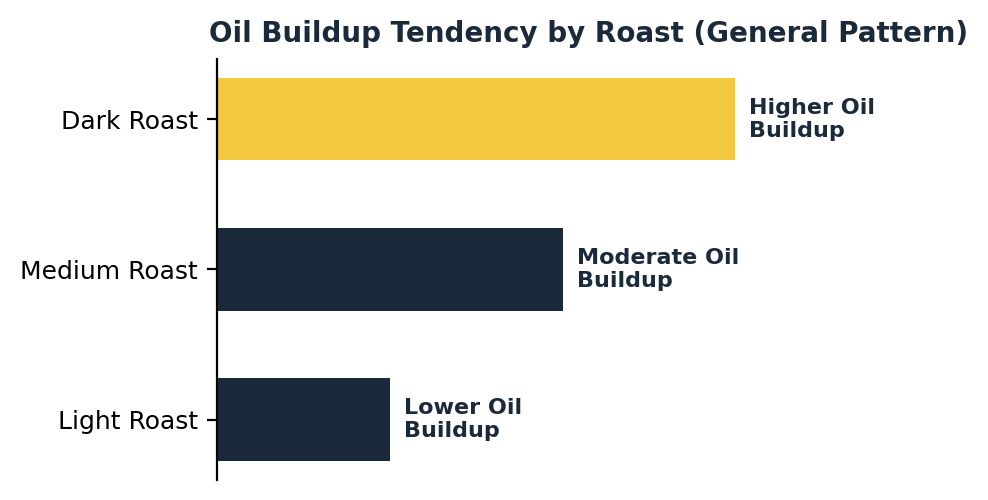
Those numbers shift with the beans. Dark roasts carry far more surface oil than light roasts, and that oil is exactly what gums up burrs, clogs chutes, and turns fresh grounds rancid faster than most people expect.
If you’re grinding dark roast daily, cut the interval in half. A quick wipe-down after every use buys you time between the deeper cleans either way.
This isn’t just a home-kitchen guess. America’s Test Kitchen spoke with working coffee professionals on exactly this question, and the consensus lines up with what oxidation chemistry would predict: oil buildup is the primary driver, not a fixed calendar date. Static buildup is a second, independent factor: it makes grounds stick to the burrs and grind less evenly, and it builds up on its own schedule regardless of oil.
The Critical Mistake: Judging by Looks, Not Oil
The single most common mistake isn’t neglecting the grinder entirely. It’s waiting for a visible cue, a greasy sheen on the burrs or a clump of stuck grounds, before doing anything. By that point the damage to your coffee’s flavor has been happening for weeks.
Oils oxidize invisibly first. Taste is the earlier warning sign, not sight.
Watch for a few real signs instead of waiting on appearance. A flat or slightly bitter edge that wasn’t there with the same beans a month ago. Grind size drifting even though you haven’t touched the dial.
A grinder that suddenly sounds like it’s working harder for the same amount of coffee. Any one of those means it’s time, regardless of what the calendar says.
Static is the other half of the equation people miss. A retail training manager at Joe Coffee Company in New York explained to America’s Test Kitchen that static causes grounds to stick to the burrs, which makes the grind less consistent independent of oil buildup. A grinder can look clean and still be underperforming for this reason alone.
Put the two together and the real lesson on how often to clean coffee grinder maintenance needs is simple: don’t wait for a signal you can see. By the time it’s visible, the flavor cost already happened weeks earlier.
How to Clean a Burr Coffee Grinder
Knowing how to clean a burr coffee grinder properly matters more here than with a blade model, mostly because the burrs themselves are the expensive part and the easiest thing to damage. Unplug the grinder first, every time. Remove the hopper and wash it in warm, soapy water if it’s detachable; most modern burr grinders make this a twist-and-lift job.
Once the hopper’s off, access the upper burr (usually a twist or a couple of screws) and brush both burr surfaces with a stiff, dedicated grinder brush, not your fingers. Grounds hide in the chute and around the burr carrier more than people expect. A cotton swab handles the chute; a dry brush handles the rest.
Wipe everything down with a barely damp cloth, never a soaked one, and let every part air-dry completely before reassembling. Do this once and how to clean a burr coffee grinder stops feeling like a mystery and becomes routine muscle memory.
One warning worth repeating: don’t run rice through a burr grinder. The rice-through-the-grinder trick works fine on blade grinders, but a coffee industry co-founder interviewed by America’s Test Kitchen was direct about the burr-grinder version of this hack.
Rice can chip or dull the burrs, strain the motor, and clog the mechanism with starch, and doing it may void your warranty outright if the manual prohibits it. Save the rice trick for blade grinders and spice grinders only.
That single distinction, burr versus blade, is the biggest factor in how to clean a burr coffee grinder safely versus a cheaper blade unit you can be rougher with.
How to Clean Baratza Encore
If you’re wondering how to clean Baratza Encore burrs specifically, the ESP version actually makes this easier than most burr grinders. Its quick-release burr mounting system was redesigned so the whole burr set lifts out without disassembling the rest of the machine, which is a real upgrade over the original Encore’s tools-required removal. Anyone searching how to clean baratza encore models built before this redesign will find the process considerably more involved, since the older burr mount needs a screwdriver rather than a twist-release.
That said, verified buyer feedback on the current listing flags something the marketing copy doesn’t: fine coffee dust can still find its way into interior spots that the quick-release burr doesn’t expose, especially after a year or two of daily use. A vacuum with a narrow nozzle attachment handles what a brush alone can’t reach.
For a real-world routine, Consumer Reports tracked one Baratza Encore across nearly a decade of daily grinding. The owner’s current maintenance schedule: Grindz burr-grinder cleaning tablets run through monthly, plus a full vacuum-out once a week, for a machine used for 35 to 51 grams of coffee every single day. That’s a heavier routine than most home grinders need, but it’s a useful upper bound if you’re grinding daily and want the grinder to last a decade too.
Whichever routine you land on, how to clean baratza encore models correctly comes down to the same core habit: work with the quick-release burr, not around it.
How to Clean a Cuisinart Coffee Grinder
Anyone searching how to clean a Cuisinart coffee grinder usually already owns the DBM-8P1, a flat-burr grinder built around a fully removable bean hopper and grind chamber, both dishwasher-safe on the top rack by Cuisinart’s own instructions. That removability is the whole reason this model is easy to live with day to day: wash the hopper and chamber in warm, soapy water, dry completely, and you’ve covered the bulk of routine cleaning.
For the burrs themselves, one long-time owner’s routine, confirmed in a verified purchase review, is to turn the grind selector toward “coarse” repeatedly until residue works loose, then dry-brush the burrs and threading rather than introducing water anywhere near the motor housing. That owner also runs white rice through once a month to pull embedded oils out, a method that’s genuinely fine on this flat-burr Cuisinart design, unlike the caution above for higher-end conical burr grinders such as the Baratza.
Worth knowing before you buy or reopen this model: multiple verified reviewers report the plastic burr-holder components are the first thing to fail, sometimes within a year of daily use, and the grounds bin’s static cling is a known annoyance. Neither is a cleaning failure exactly, but both make the case for gentle handling during every cleaning pass rather than forceful disassembly.
Bookmark this section if you’re specifically looking up how to clean a Cuisinart coffee grinder after a bag of dark roast, since that’s when the plastic components above take the most strain.
How to Clean a KRUPS Coffee Grinder
If you’re trying to figure out how to clean a KRUPS coffee grinder for the first time, start with the Precision model’s design: a removable top burr and grind chamber built specifically for mess-free operation. The manufacturer’s own guidance is refreshingly simple: clean it regularly, and tap the unit before opening the lid to shake loose static cling before grounds have a chance to scatter across the counter.
In practice that means popping off the grind chamber after most uses for a quick empty and wipe, then pulling the top burr free every couple of weeks for a proper brush-down. The included cleaning brush is sized for this exact job, small enough to get into the chamber’s corners without disturbing the burr alignment underneath. Most people looking up how to clean a KRUPS coffee grinder just need this two-step habit, not a deep teardown.
Verified reviewers note this model can gum up with impacted grounds on the finer settings, especially with oilier dark roasts, and that unclogging it is straightforward but genuinely messy. Keep a dry cloth or dustpan within reach before you start, and avoid overfilling the hopper, since Krups’ own guidance flags overfilling as a direct cause of inconsistent grinding and buildup.
Once you’ve got the routine down, how to clean a KRUPS coffee grinder becomes a two-minute job rather than a dreaded chore.
Verified Grinder Snapshot
Since the three grinders above come up constantly in how often to clean coffee grinder questions, here’s where they stand on Amazon as of this guide’s most recent verification pass. Current price, rating, and badge status for each are below; the CTA buttons further down link straight to the listing if you’d rather shop than maintain.

| Baratza Encore ESP | |
| Price | $199.95 |
| Rating | 4.1★ (1,356 reviews) |
| Badge | Amazon’s Choice |
| Buy | Check Price |
| Cuisinart DBM-8P1 | |
| Price | $74.95 |
| Rating | 4.2★ (49,086 reviews) |
| Badge | No badge |
| Buy | Check Price |
| KRUPS Precision | |
| Price | $67.12 |
| Rating | 4.1★ (7,512 reviews) |
| Badge | Amazon’s Choice |
| Buy | Check Price |
Cleaning Tools Worth Keeping On Hand
A handful of low-cost tools cover nearly every cleaning routine above, and having them on hand is half the reason people fall behind on how often to clean coffee grinder maintenance in the first place. If the brush is buried in a drawer somewhere, a five-minute job turns into a fifteen-minute search first. A dedicated grinder brush with a stiff, angled head reaches burr carriers that a standard bottle brush can’t.
A narrow vacuum attachment, the kind sold for keyboards, handles the fine dust that brushing alone leaves behind. And for burr grinders specifically, grinder cleaning tablets are the safer substitute for the rice trick.
Urnex’s Grindz tablets show up repeatedly as a pairing recommendation on both the Baratza and Cuisinart listings, and it’s easy to see why: they’re formulated specifically to absorb grinder oils without the burr-damage risk that rice carries. Run a tablet through on the coarsest setting once a month for a daily-use burr grinder, following whatever interval your specific model’s manual recommends first.
Storage matters more than people assume, too. Beans kept in a sealed, opaque container stay fresher and produce less oil residue in the grinder than beans left in a clipped-shut bag on the counter, since both light and repeated air exposure accelerate the same oxidation that dirties your burrs early. Pairing a decent storage container with whatever cleaning schedule you land on above is a small change that measurably stretches the gap between deep cleans.
Does Your Brew Method Change the Schedule?
Grind size itself doesn’t change how often to clean coffee grinder units need attention, but the beans that go with certain brew methods often do. Espresso drinkers tend to buy darker, oilier roasts to cut acidity, which is exactly the profile that gums up burrs fastest; if that’s you, check our budget espresso machine picks for machines built around that same oily-bean reality, and lean toward the shorter end of the cleaning windows above.
Pour-over brewing usually pairs with lighter roasts and a coarser, more even grind, which produces less oil residue and less static cling per session. Cold brew sits at the coarse end of the spectrum too, and since cold brew coffee makers are typically an occasional-use appliance rather than a daily one, the grinder feeding them usually falls into the 8-to-10-week camp by default. If you’re new to grinding altogether, our coffee maker buying guide covers how grind type and brew method fit together before you commit to any one setup.
Bottom line: how often to clean coffee grinder maintenance needs shifts with your cup, not just your calendar, so match the schedule to what’s actually in your hopper.
Quick Recap
How often should you clean a coffee grinder if you just want the short version? Daily grinding: every 2 to 3 weeks. A few times a week: around 6 weeks.
Occasional use: 8 to 10 weeks. Oily dark roast, at any frequency: cut that interval roughly in half.
On the rice question specifically: clean coffee grinder with rice only if it’s a blade grinder or a flat-burr model whose manual doesn’t prohibit it, like the Cuisinart above. For conical burr grinders, reach for cleaning tablets or a brush instead. And if you’re specifically searching how do you clean a burr coffee grinder step by step, that’s the dedicated section higher up on this page, not a shortcut version here.
Frequently Asked Questions
A few more specific questions come up constantly around how often to clean coffee grinder units and the safest methods for doing it, answered directly below.
Is it safe to use rice to clean a coffee grinder?
It depends entirely on the grinder type. Rice is a reasonable, low-cost method for blade grinders and flat-burr models built for it, like the Cuisinart DBM-8P1, where owners report success running white rice through monthly. On conical burr grinders, coffee industry professionals caution against it: rice can chip the burrs, strain the motor, and clog the mechanism with starch, and it may void your warranty if the manual prohibits it.
How do you know when your coffee grinder needs cleaning?
Taste is the earliest and most reliable signal, a flat or slightly bitter edge compared to the same beans a month ago. Grind size drifting without you touching the dial, a louder or harder-working motor, and visible oily residue on the burrs are the next signs, roughly in that order of how early they show up.
How do you clean the burrs on a coffee grinder?
Unplug the grinder, remove the upper burr according to your model’s release mechanism, and brush both burr surfaces with a dedicated grinder brush rather than water. A cotton swab clears the coffee chute. Everything needs to air-dry completely before you reassemble, since any lingering moisture near the motor housing is a real risk.
Final Verdict
How often to clean coffee grinder maintenance really needs isn’t a fixed date on a calendar, it’s a response to how much oil and static your specific routine produces. Daily grinders need attention every 2 to 3 weeks, occasional users can stretch past two months, and oily dark roasts push everyone toward the shorter end regardless of frequency. The mistake that costs people the most flavor isn’t skipping cleaning entirely, it’s waiting for a visible cue that shows up long after the taste already has.
None of this requires a complicated system. A running note on your phone, or even a sticky reminder on the grinder itself, is enough to keep the interval honest once you’ve picked one that fits your usage. The moment it starts feeling like a guess again is the moment to go back to taste as the tiebreaker.
If you’re pulling fine dust and stale flavor out of a Baratza, Cuisinart, or KRUPS right now, start with the model-specific steps above rather than a generic routine, since burr type and construction genuinely change what’s safe to do. And if your current grinder is past saving, our guide to coffee maker and grinder types is a good starting point before you shop for a replacement.
Free delivery available with Amazon Prime
As an Amazon Associate, HomeApplianceOwl earns from qualifying purchases made through links on this page, at no extra cost to you.