
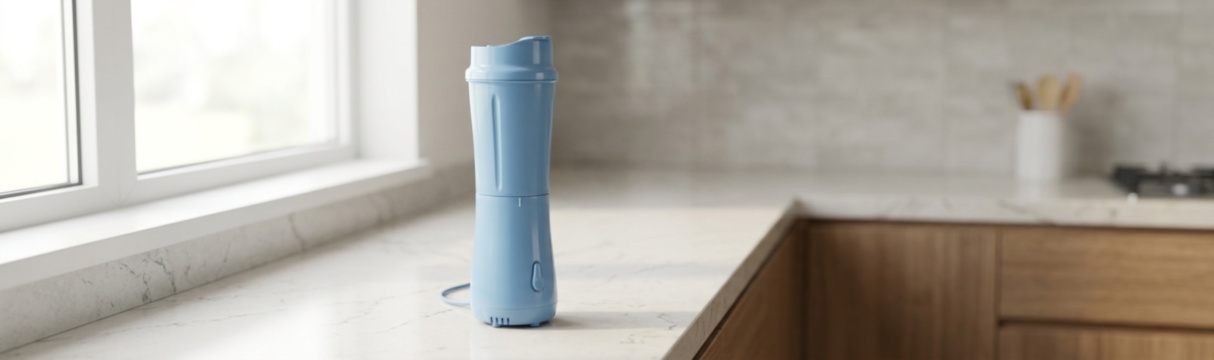
Most single-serve blenders promise convenience and quietly skip the fine print on durability. The hamilton beach single serve blender follows that pattern closely: it blends a smoothie in under a minute, costs less than a dinner out, and carries more than 50,000 ratings on Amazon.
The current Blue 51132G model holds an Amazon’s Choice badge and a 4.3-star average. You can check today’s price on the Blue 51132G right now, then come back for the full breakdown, including the 1 mistake that catches a chunk of buyers off guard around month six.
This isn’t the only budget option in the category, and it won’t be the right fit for everyone. If you’d rather compare it against the wider field first, our best personal blender for smoothies guide lines up several competitors side by side, and the compact personal blender roundup covers five travel-jar models including this one’s cheapest sibling.
If you’ve been comparing single-serve blenders side by side, the hamilton beach single serve blender is one of the cheapest entries in the category still worth taking seriously, provided you know what you’re trading away for the price.
What’s Inside This Review
- Quick Verdict: Is It Worth It?
- What to Look For in a Single-Serve Blender
- Where the Single-Serve Fits in the Lineup
- Hamilton Beach 51101 vs. the Blue 51132G
- Real-World Performance
- The 1 Mistake Buyers Keep Making
- Color Options Compared
- Is It the Best Single Serve Blender for the Price?
- Who Should (and Shouldn’t) Buy This
- Quick Recap
- FAQ
- Final Verdict
Quick Verdict: Is the Hamilton Beach Single Serve Blender Worth It?
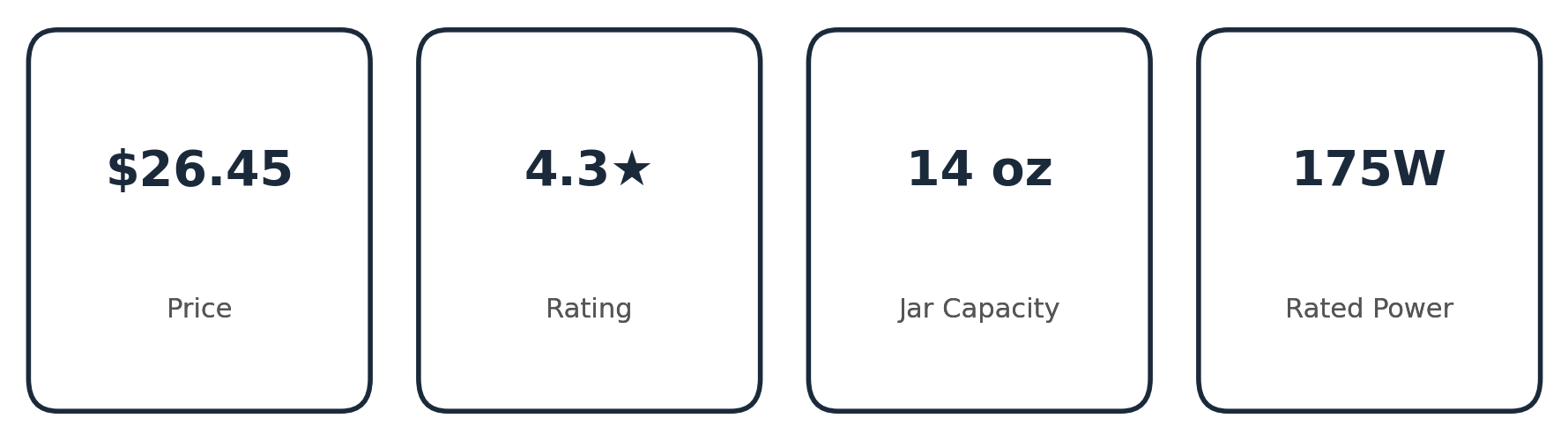
The hamilton beach single serve blender is worth buying at $26.45 for the Blue 51132G model, which carries Amazon’s Choice and a 4.3-star average across 50,729 ratings, but its plastic drive gear is the 1 mistake that catches buyers off guard.
Bought/mo: not disclosed on the current listing. Amazon does not show a figure for this ASIN at the moment, so we’re reporting that honestly rather than guessing.
Here’s the short version before you scroll further. The blender itself is a 14-ounce single-speed unit built around a fixed stainless steel blade, a BPA-free jar that doubles as the travel cup, and a compact base with a 24-inch cord that wraps neatly for storage.
It’s not a powerhouse, and it’s not trying to be one. It’s a cheap, fast way to make a single smoothie without pulling out a full-size blender and washing a pitcher afterward.
Free delivery available with Amazon Prime
What to Look For in a Single-Serve Blender
Single-serve blenders live and die on a handful of details that don’t always show up in the marketing bullets. Before buying a hamilton beach single serve blender, or any single-serve blender, here’s what actually matters.
- Rated vs. peak power numbers on the box. Marketing copy leans on the bigger peak-watt figure, but the rated wattage is what the motor runs at during normal use.
- Jar material and whether it doubles as a travel cup with a sealed lid, or just a blending container.
- Blade assembly design. Some jars separate from the blade for easier cleaning; others, like this one, keep the blade fixed to the jar.
- Dishwasher-safe parts, since hand-washing every day gets old fast.
- Cord storage and base footprint if counter space is tight.
For a broader walk-through of blender types and what separates a good pick from a bad one, our blender buying guide covers the fundamentals in more depth.
Worth adding to that list: how the manufacturer handles warranty claims. A single-serve blender in this price range isn’t an investment piece, but a 1-year warranty that’s actually easy to file a claim under can be the difference between one purchase and five. That’s especially true given the failure pattern we cover later in this review.
Hamilton Beach Personal Blender: Where the Single-Serve Fits in the Lineup
Hamilton Beach sells personal blenders across a wide price spread, and the single-serve travel-jar line is the entry point. It sits well below the brand’s own Power Elite full-size blender, which trades portability for a 700-watt motor and a 40-ounce glass jar built for whole-family batches.
Within the single-serve family itself, Hamilton Beach also sells a 2-jar version, a cordless USB-rechargeable model, and a Go Sport 20-ounce option with a stronger 600-watt motor. This review focuses on the standard 14-ounce travel-jar model, since it’s the version most people mean when they search for a hamilton beach personal blender in this price range.
It’s a useful reference point for the brand overall. As a hamilton beach personal blender, the single-serve line leans hard into affordability, and that same philosophy runs across the brand’s whole small-appliance catalog, not just blenders.
Our KitchenAid Go Cordless Hand Mixer review covers a different appliance category entirely, but the pricing philosophy across budget kitchen brands tends to rhyme: lower upfront cost, lighter-duty internal components, and a trade-off between price and how many years you can expect out of daily use.
If your smoothie habit is closer to a daily ritual than an occasional treat, it’s worth reading that trade-off honestly before buying. This blender is built for someone trying single-serve blending for the first time, not necessarily for someone replacing a blender they’ve relied on for years.
Hamilton Beach 51101 vs. the Blue 51132G: What Actually Changed
The Hamilton Beach 51101 is the black version of this same blender, and it’s the one most people picture when they think of this product. The Blue 51132G is mechanically identical, down to the 14-ounce jar and the 175-watt rated motor.
Same travel lid, same cord length, same fixed blade design. The difference is entirely in the listing data.
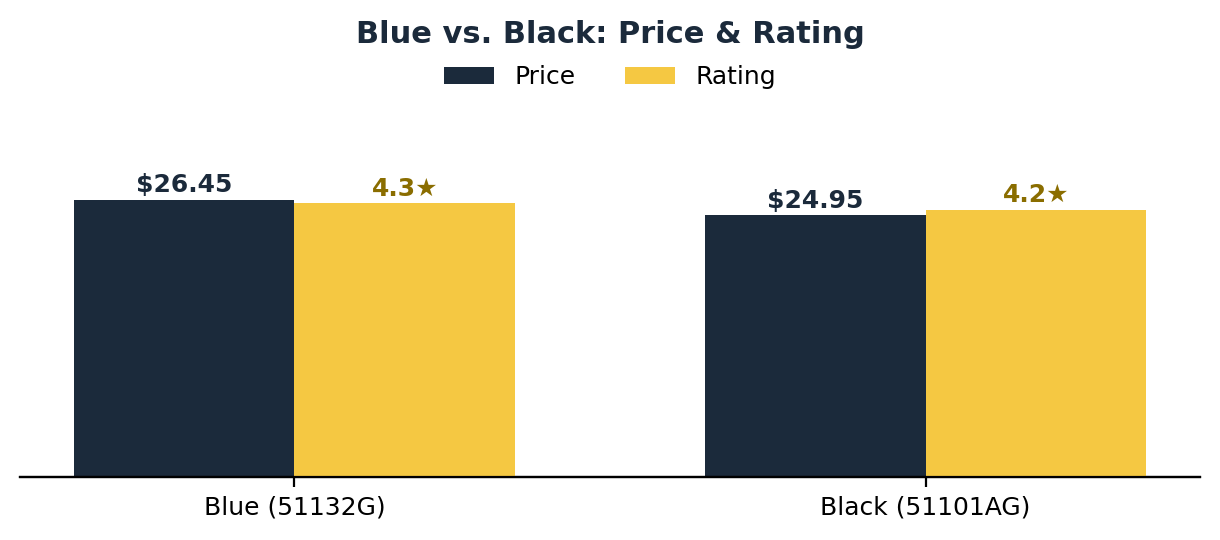
Right now the Blue model has a higher rating, a larger review base, and an active Amazon’s Choice badge, while the Black model carries neither badge at its current price. Color aside, this is one product wearing two different listings.
Why does that happen? Amazon badges and Choice designations shift based on recent sales velocity, return rates, and pricing relative to similar items, not just the underlying product quality. Two listings of the same physical blender can drift apart over months as one accumulates more recent reviews or briefly dips in price.
That’s exactly what appears to have happened here.
The practical takeaway: don’t assume the listing with more total reviews is automatically the better buy. Check the current badge, current price, and current rating each time, since these numbers move. The Black 51101AG was the more established listing when it first launched, and it’s still the one referenced most often in older coverage and forum threads, including our own compact personal blender roundup, where it appears as the budget pick.
Single Serve Smoothie Blender: Real-World Performance
Consumer Reports lab-evaluated the Hamilton Beach Single Serve Blender 51101 and found it performed reasonably well overall for a budget single serve smoothie blender, though one of the samples they evaluated failed their repeated ice-crush durability round. Their broader personal-blender category finding lines up with that: these compact units handle soft fruit smoothies and milkshakes fine, but they’re not built for heavy ice, nuts, or frozen produce the way a full-size blender is.
Consumer Reports’ lab notes also score this model “good” on both ice crush and noise, which is a more generous read than the durability finding above might suggest on its own. The two results aren’t in conflict. A blender can crush ice acceptably in a single session and still wear out internally after months of repeated use, which is exactly the pattern their durability check and the owner reports below both point to.
RTINGS ran a direct comparison against the Magic Bullet Mini and gave the edge to the Magic Bullet, citing sturdier build quality and a smoother result on fibrous ingredients like kale. The Hamilton Beach also can’t make nut butter the way the Magic Bullet can, according to that comparison. If you want the Magic Bullet’s take on this exact matchup, our Magic Bullet Personal Blender review covers where it wins and where it doesn’t.
One spec worth flagging: Amazon’s own listing headline advertises “300 Watts Peak Power,” but the same listing’s product-comparison table lists the rated motor at 175 watts. That’s not a contradiction so much as marketing shorthand.
Peak power is a burst figure that the motor only hits for a fraction of a second under load, while 175 watts is what it runs at during normal blending. We’re reporting both here so the number doesn’t surprise anyone mid-recipe.
In practical terms, that 175-watt rated figure is on the low end for this category. Our Ninja BN401 review covers a competitor running considerably more power at a slightly higher price, which is worth a look if raw blending strength matters more to you than cost.
Durability: The 1 Mistake Buyers Keep Making
The mistake is simple: buyers assume this hamilton beach single serve blender will hold up the same way a full-size countertop model does, then push it hard on frozen fruit and full ice cubes for months on end. Amazon’s own review summary flags this exact pattern, noting strong marks for portability and ease of use alongside recurring complaints about durability and inconsistent power on frozen ingredients.
Individual verified reviews back that up. One long-time buyer described repurchasing the same blender five times over three years, with a different internal part failing roughly every six to seven months each time, whether it was the drive gear, the cup’s blade support, or the blade itself. Another verified buyer, this one in the UAE, reported smoke coming out with the first use.
That second report is a single incident, not a pattern, and it’s worth reading as exactly that. But paired with Consumer Reports’ own durability-check failure on this same model, it’s a fair reason to treat the 1-year warranty as more than a formality.
None of this makes the hamilton beach personal blender a bad buy. It makes it a blender that rewards realistic expectations. Buyers who treat it as a soft-smoothie machine rather than an ice-crushing workhorse tend to report years of use out of the same unit, which tracks with the 66 percent five-star share in the breakdown below.
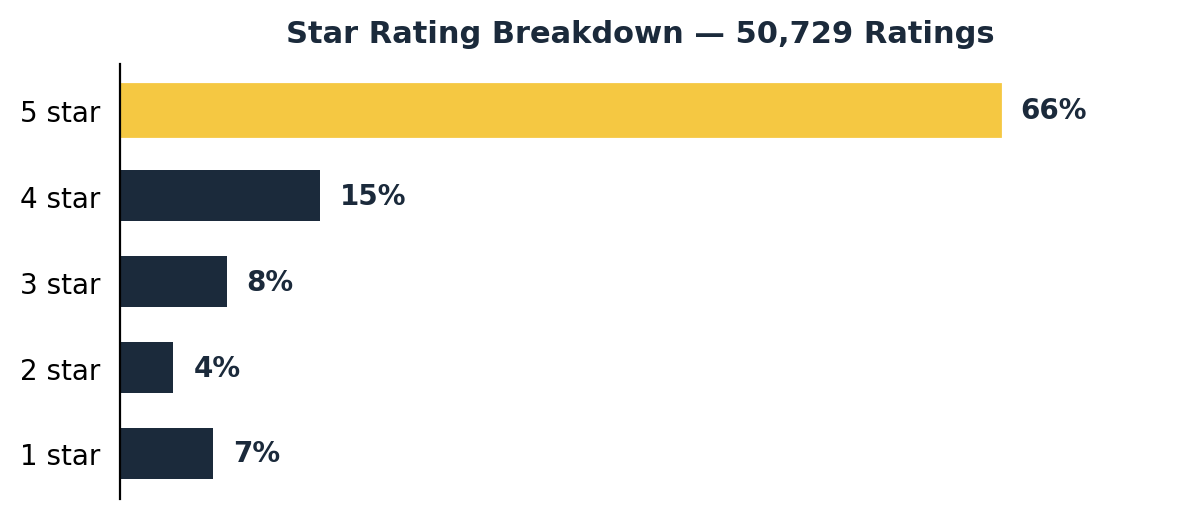
The star breakdown reflects that split. Two-thirds of ratings land at 5 stars, but the 1-star tail (7 percent) is larger than the 2-star and 3-star bands combined, which usually points to a subset of units failing outright rather than gradually disappointing.
Color Options Compared: Black vs. Blue
Both colors are the same blender mechanically. The table below covers the two we verified directly on Amazon.
| Blue 51132G | |
|---|---|
| Price | $26.45 |
| Rating | 4.3★ (50,729 ratings) |
| Badge | Amazon’s Choice |
| Bought/Mo | Not disclosed |
| Buy | Check Price |
| Black 51101AG | |
|---|---|
| Price | $24.95 |
| Rating | 4.2★ (40,810 ratings) |
| Badge | None currently |
| Bought/Mo | Not disclosed |
| Buy | Check Price |
Our pick is the Blue, purely on current listing strength. If Black’s badge and rating catch back up later, that could flip. Prices and badges shift often enough that it’s worth a quick glance at both links before you buy.
Either color makes a fair case for being the best single serve blender in this price tier, since the badge and rating gap between them is more about listing momentum than any real difference in the blender itself.
Beyond Black and Blue, Hamilton Beach also lists this same blender in White, Red, and Raspberry across various retailers, along with a few pack bundles that include spare jars. We haven’t verified those additional colors against a live Amazon listing with the same rigor as Black and Blue, so we’re not including them in the comparison table above. If you spot one at a noticeably lower price, the physical blender is the same regardless of jar color.
Is This the Best Single Serve Blender for the Price?
At $26.45, yes, with a condition attached. As a best single serve blender candidate, nothing else in this price bracket combines a 4.3-star average, a 50,000-plus review base, and a current Amazon’s Choice badge. That’s a genuinely strong showing for a blender under $30.
The condition is durability. Step up to the Magic Bullet Personal Blender or the NutriBullet Pro 900 and you’ll pay more, but both use metal drive components instead of the plastic gear that tends to fail here.
If longevity matters more than upfront price, one of those is the safer bet. If you’re buying this as a low-commitment way to try out whether a single-serve blender fits your routine, the Hamilton Beach is the cheaper way to find out.
Who Should (and Shouldn’t) Buy This
Buy it if
- You want a cheap, low-commitment way to try a single-serve blender.
- Your smoothies lean soft fruit and yogurt rather than full ice cubes.
- You need a travel-lid cup that doubles as your drinking container.
Skip it if
- You blend daily with hard ice cubes or frozen fruit straight from the freezer.
- You want nut butter or fully pureed kale, where the Magic Bullet performs better.
- You expect multi-year durability without a backup plan.
Somewhere in between are buyers replacing a blender they already know they’ll use hard. In that case, spending a bit more upfront on a model with a metal drive train, like the Ninja Professional Plus or a step-up personal blender, usually costs less over two or three years than replacing this one every six to seven months.
Taken together, the hamilton beach single serve blender fits a narrower use case than its price tag suggests. Match your habits to that use case and it’s a genuinely good buy.
Quick Recap: Hamilton Beach Single Serve Blender at a Glance
This hamilton beach single serve blender review with travel lid covers both the Black and Blue versions, sold under model numbers 51101 and 51132G. Rated power sits at 175 watts, capacity is 14 ounces, and the current price runs $24.95 to $26.45 depending on color.
As a single serve smoothie blender, it does one job well: soft-ingredient smoothies in under a minute, with easy cleanup and a travel lid that doubles as your cup. It’s not a fit for daily heavy ice or nut butter.
Against the Magic Bullet, the Hamilton Beach wins on price and loses on build quality and ice-crushing consistency. That trade-off, more than any single feature, is what should drive the decision.
A few more details worth knowing before you check out: the watts figure to trust for day-to-day expectations is 175, not the 300-watt peak number in the headline. The jar and blade are one fixed piece, so a cracked jar means replacing the whole cup assembly rather than just a blade. And the travel lid uses a friction fit rather than a locking mechanism, which is fine for a car cup holder but not something we’d trust upside-down in a bag.
If none of that changes your mind, both colors are worth a look before you commit to one. And if this review has you leaning toward a sturdier alternative instead, our best blenders under $100 roundup covers a wider range of full-size and personal options at slightly higher price points.
FAQ
Here are the questions people ask most often about the hamilton beach single serve blender before buying, based on what shows up repeatedly in competitor coverage and verified owner reviews.
Can the Hamilton Beach single serve blender crush ice?
It handles small amounts of crushed or partially crushed ice reasonably well, but Consumer Reports and multiple verified buyers report it struggling with full-size ice cubes over time.
- Better with pre-crushed ice than whole cubes straight from the tray.
- Performance drops as the internal gear wears down over months of use.
Is the Hamilton Beach single serve blender good for smoothies?
Yes, for soft-ingredient smoothies. As a single serve smoothie blender, fresh or slightly thawed fruit, yogurt, and protein powder blend smoothly in under a minute.
- Best results come from soft fruit rather than rock-hard frozen chunks.
- Leafy greens blend less smoothly than on higher-powered competitors.
How long does the Hamilton Beach single serve blender last?
Reports vary widely for this hamilton beach personal blender. Some owners report years of daily use, while others describe a part failing around the six-to-seven-month mark under heavier use.
- Light use tends to outlast heavy daily ice-blending by a wide margin.
- The 1-year manufacturer warranty is worth registering after purchase.
Final Verdict
The hamilton beach single serve blender earns its price tag. At $26.45 for the Blue 51132G, you’re getting a genuinely capable smoothie blender backed by an Amazon’s Choice badge and a 4.3-star average across more than 50,000 ratings.
Just go in knowing the drive gear is plastic, not metal, and treat full ice cubes as an occasional task rather than a daily one. Do that, and this stays one of the cheapest reliable ways into single-serve blending.
Free delivery available with Amazon Prime
As an Amazon Associate, HomeApplianceOwl earns from qualifying purchases made through links on this page, at no extra cost to you.