

Cuckoo rice cooker review data points to the CRP-P0609S as the strongest pick, thanks to 29 PSI high-pressure cooking that delivers restaurant-quality rice in under 20 minutes — though one real durability flaw is worth knowing before you buy. Most reviews skip straight to the spec sheet and never mention what actually breaks down the road. After digging through real owner reviews and community pricing threads, that flaw stood out enough to change who this cooker is really for.
This review focuses on the 6-cup CRP-P0609S specifically, since it’s the size with the deepest review history (2,613 ratings) and the clearest owner consensus on both strengths and weaknesses. A 10-cup variant of the same pressure technology exists for larger households, though it currently shows limited stock and no reliable new-condition offer, so it’s addressed separately in the alternatives section rather than treated as an equal option here.
Everything in this cuckoo rice cooker review is built from the live Amazon listing’s own specs and verified rating data, Amazon’s aggregated “Customers say” review analysis, a real Slickdeals pricing thread on this exact model, and editorial rice cooker testing from CNN Underscored. Nothing here is guessed or pulled from a manufacturer press release.
Free delivery available with Amazon Prime
What We Cover
- Quick Verdict: Is the Cuckoo CRP-P0609S Worth It?
- Cuckoo Pressure Rice Cooker vs Micom Rice Cooker: Which Technology Wins?
- Full Review: Cuckoo Rice Cooker CRP-P0609S
- Performance and the One Real Flaw to Know
- Best Cuckoo Rice Cooker Alternatives by Size
- Is the Cuckoo CRP-P0609S Right for You?
- Frequently Asked Questions
- Final Verdict
Quick Verdict: Is the Cuckoo CRP-P0609S Worth It?
The short answer this cuckoo rice cooker review lands on: yes for pressure-cooked speed and texture, with one durability trade-off worth budgeting for around year four of daily use. Here’s the full cuckoo rice cooker crp p0609s spec snapshot before the detailed breakdown.
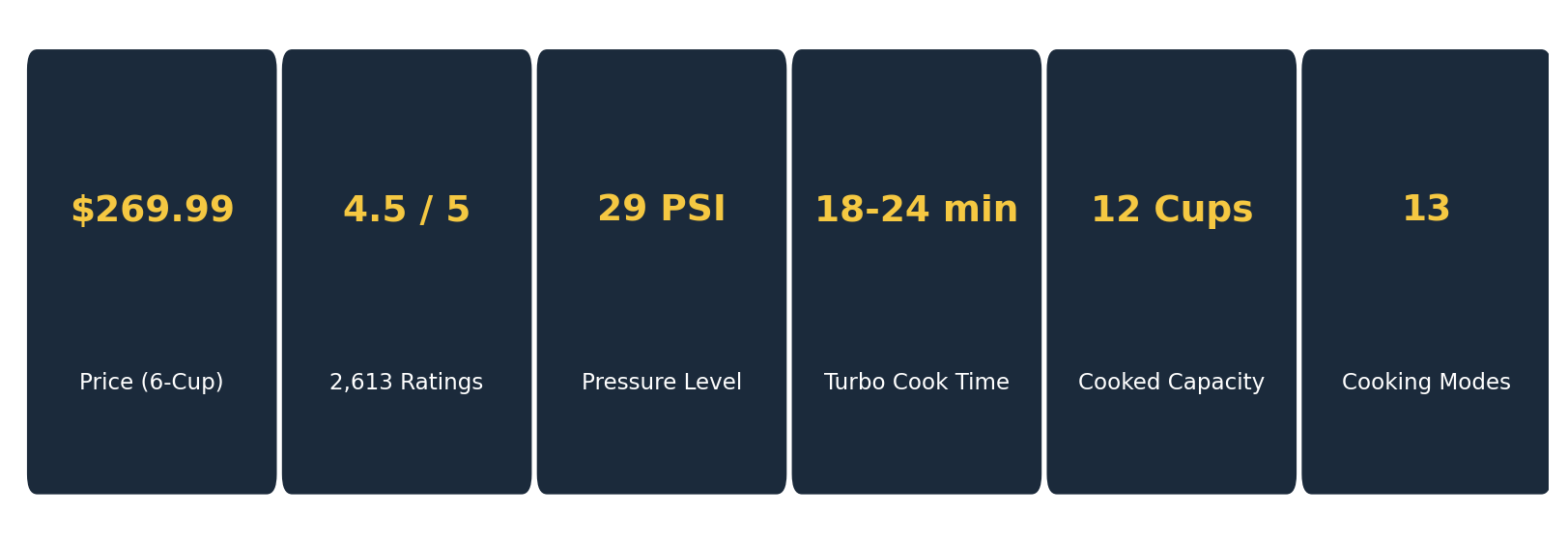
At $269.99, this sits well above entry-level Micom models, and the price is the first objection most buyers raise. The 2,613 verified ratings average 4.5 stars, and the feature set (13 cooking modes, auto-clean steam sterilization, a Teflon-free nonstick pot) explains why. It carries no Amazon’s Choice or Best Seller badge right now, so it’s winning purely on repeat demand rather than platform promotion.
The short version: if you cook rice more than a few times a week and want restaurant-style texture without babysitting a stovetop pot, the CRP-P0609S is a genuine upgrade over a basic plug-in cooker. If you’re an occasional white-rice-only cook, the value case gets a lot weaker, and a cheaper Micom model closes most of the quality gap for a fraction of the price.
One sizing detail catches new buyers off guard: Cuckoo lists capacity in uncooked cups, not cooked cups. The “6-cup” in this model’s name means 6 cups of dry rice, which expands to roughly 12 cups once cooked — plenty for a family of four to five with leftovers, not just a couple.
Cuckoo Pressure Rice Cooker vs Micom Rice Cooker: Which Technology Wins?
Cuckoo splits its lineup into two real technology tracks, and mixing them up is the most common buying mistake. A cuckoo pressure rice cooker like the CRP-P0609S seals the pot and cooks under 29 PSI, which is why it can finish a batch in 18 to 24 minutes on turbo mode.
A cuckoo micom rice cooker, by contrast, uses Fuzzy Logic heat sensors instead of sealed pressure. Models like the CR-0632F and CR-0655F rely on this approach, and they run slower but at a noticeably lower price point. Neither approach is wrong — they’re built for different kitchens.
This distinction is the single most useful thing a cuckoo rice cooker review can clarify upfront, since most buying regret traces back to picking the wrong technology for how a household actually cooks, not a defective unit.
- Choose pressure if you eat brown rice, GABA rice, or mixed grains often, since a cuckoo pressure rice cooker breaks down tough grains far faster than open heating.
- Choose Micom if you mostly cook plain white rice and want to spend under $150 rather than over $250 — a cuckoo micom rice cooker like the CR-0632F handles that job well.
- Both include auto-clean and keep-warm functions, so that part of the decision is a wash.
If you’re weighing pressure-cooking approaches more broadly and not just within Cuckoo’s own lineup, our rice cooker vs Instant Pot comparison breaks down how a dedicated rice cooker’s sealed system differs from a general multicooker running a rice setting.
Price tends to track the technology split closely. Pressure models across Cuckoo’s lineup generally start around $200 and climb past $300 for larger capacities, while Micom models start closer to $80 and rarely cross $150 even at 6-cup capacity. That gap alone answers the question for a lot of buyers before features even enter the conversation.
Noise is a smaller but real factor too. Pressure cooking involves a steam-release cycle at the end of the cook, which produces a brief hiss that Micom models don’t have. It’s not loud enough to disturb another room, but it’s noticeable if the cooker sits on a counter near a dining table.
Warranty coverage runs through Cuckoo directly on both technology types rather than varying by price tier, so a pricier pressure model doesn’t automatically come with longer manufacturer backing. Amazon’s standard 30-day return window applies to new-condition units regardless of which line you choose, which is worth using if the unit arrives with any pressure-seal defect out of the box.
Full Review: Cuckoo Rice Cooker CRP-P0609S
This section of the cuckoo rice cooker review covers the full spec sheet, real cooking performance, and what’s included in the box. Search interest for “cuckoo rice cooker crp p0609s” specifically has grown fast, so the spec table below uses the exact model naming buyers are searching for.
| Cuckoo CRP-P0609S Specs | |
|---|---|
| Price (6-Cup) | $269.99 |
| Capacity | 6 cups uncooked / 12 cups cooked |
| Pressure Level | 29 PSI (200 kPa) |
| Turbo Cook Time | 18-24 minutes |
| Cooking Modes | 13, including GABA, brown rice, porridge, multi-cook |
| Inner Pot | Nonstick, Teflon-free |
| Rating | 4.5 / 5 (2,613 ratings) |
The CRP-P0609S earns its price with real cooking performance. One verified owner switching from an eight-year Zojirushi described the CUCKOO high-pressure rice cooker as a genuine upgrade, citing the 20-minute cook time and evenly textured grains as the deciding factors. That head-to-head pattern lines up with what our own Cuckoo vs Zojirushi comparison found when comparing both brands’ approaches to fuzzy logic and pressure cooking side by side.
This is the cuckoo rice cooker crp p0609s spec profile that keeps coming up as the pressure-cooking benchmark in owner comparisons, and the performance section below explains why that reputation holds up.
The voice guide defaults to Korean out of the box, which catches new owners off guard until they switch it to English or Chinese in the settings menu. Cleanup uses a steam-based auto-clean cycle rather than true self-cleaning, so the detachable lid components still need a manual rinse every few uses.
What’s in the Box
Every cuckoo rice cooker review should confirm what actually ships in the box, since third-party sellers sometimes leave out accessories to cut cost.
- Nonstick inner pot rated for hand-wash only, not dishwasher-safe.
- Rice spatula shaped to fit the pot’s rounded interior without scratching the coating.
- Measuring cup sized to Cuckoo’s own rice-to-water ratio, which runs slightly smaller than a standard US cup.
- Steam plate for the multi-cook function, useful for steaming vegetables or fish alongside the rice.
The measuring cup detail trips up a fair number of new owners, since assuming a standard US cup measurement throws off the water ratio and produces mushier rice than expected. Sticking with the markings printed inside the pot itself avoids that problem entirely, regardless of which cup is used to scoop the rice.
Cleaning and Maintenance
The auto-clean cycle runs hot steam through the sealed chamber to sanitize and loosen residue, which handles daily upkeep well. It does not replace a manual wash of the inner pot, the detachable steam vent cap, or the rubber gasket that seals the lid during pressure cooking.
That gasket is the component most linked to the long-term odor complaints in owner reviews, since trapped moisture and rice starch build up in the grooves over repeated cycles. A weekly rinse with warm water and a splash of vinegar in the clean cycle addresses this before it becomes a persistent smell.
Nearly every negative cuckoo rice cooker review that mentions smell or residue traces back to skipping this weekly gasket rinse rather than a defect in the unit itself.
Free delivery available with Amazon Prime
Performance and the One Real Flaw to Know
The performance section of this cuckoo rice cooker review is where the price tag either earns its keep or doesn’t. Amazon’s aggregated review data across all 2,613 ratings confirms strong marks for performance, rice quality, and ease of use. Durability is where the pattern breaks: a recurring complaint describes the inner pot’s nonstick coating peeling and the unit failing outright around the four-year mark of regular use.
One long-term owner posted an update after four years noting the cooker was “starting to show its true colors,” and resolved the smell by running the clean cycle weekly with a splash of vinegar rather than replacing the unit. That’s a workaround, not a fix, and it’s worth budgeting for a replacement inner pot or a new unit somewhere around year four to five of daily use.
A real Slickdeals thread on this exact model backs up the value debate directly. Buyers there discussed why a Cuckoo pressure cooker costs so much more than a basic plug-in rice cooker, and the consensus landed on the sealed pressure system and inner pot quality as the reasons, even though one commenter picked up the same unit secondhand for close to a third of retail.
None of this is disqualifying. A four-to-five-year lifespan on a $270 appliance used daily is not unusual for small kitchen electronics, and the coating issue appears to affect a minority of long-term owners rather than the majority.
Texture consistency is the other side of the performance picture, and it’s consistently strong. Multiple owners describe the turbo setting producing evenly cooked grains with no hard kernels or scorched bottom layer, even at the fastest 18-minute cook cycle. That combination of speed and evenness is the main reason this model keeps beating slower Micom competitors in head-to-head owner comparisons.
Texture is exactly where a cuckoo rice cooker review earns its keep over a manufacturer spec sheet, since PSI ratings and cook-time numbers alone don’t capture how the finished rice actually tastes and feels.
One recurring piece of feedback worth flagging separately: several owners note the “glutinous rice” setting produces a stickier texture than expected for everyday white rice, closer to sushi rice than standard steamed rice. Switching to a firmer setting or reducing water slightly solves this for anyone used to drier rice from a standard cooker.
Best Cuckoo Rice Cooker Alternatives by Size
No single cuckoo rice cooker review answer fits every household, since capacity needs vary so widely. The CRP-P0609S is not automatically the best cuckoo rice cooker for every household. Capacity and cooking style both shift the answer, and Cuckoo’s own lineup covers a wider range than most buyers realize before comparing prices directly.
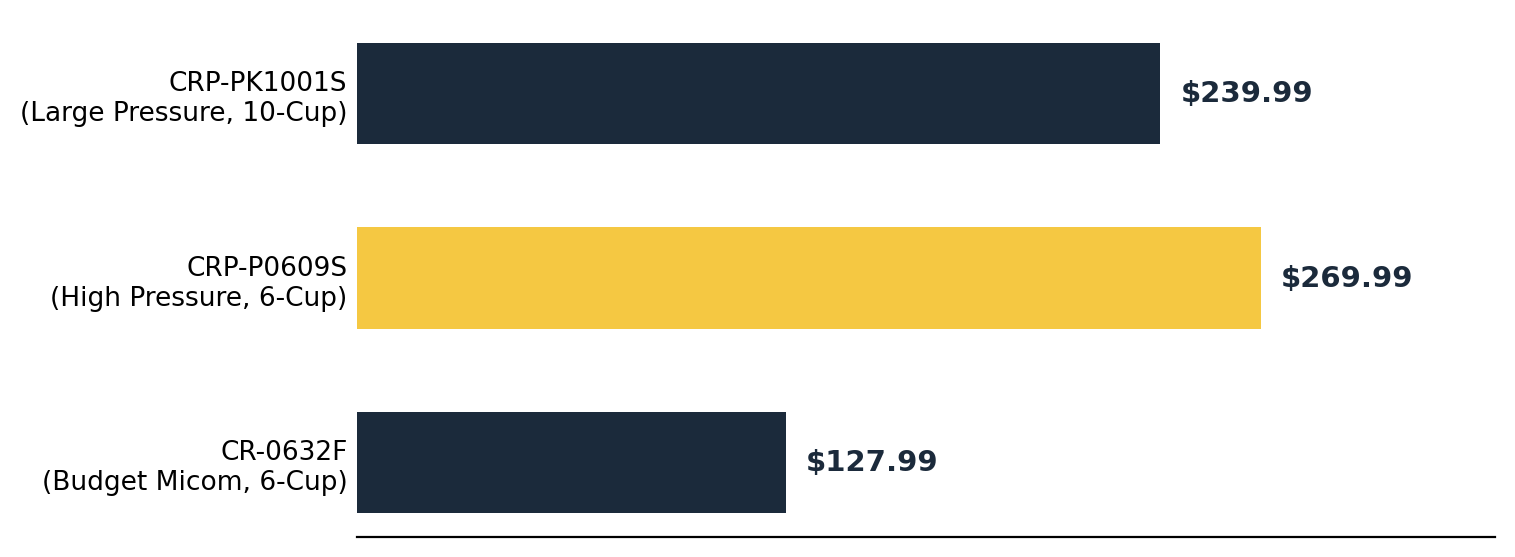
- Smaller household: the CR-0632F, a cuckoo micom rice cooker (6-cup, $127.99), skips pressure cooking entirely but costs roughly half as much and still holds a 4.6-star average across 2,900+ ratings.
- Large family: the CRP-PK1001S (10-cup, $239.99) brings the same pressure technology to a 20-cup cooked capacity for gatherings and meal-prep batches.
- This review’s pick: the CRP-P0609S sits in the middle, built for a 2-4 person household that wants pressure-cooked texture without the large-capacity price jump.
Picking the best cuckoo rice cooker for a specific household really just means matching one of these three profiles rather than defaulting to whichever model shows up first in search results.
Color and finish also vary slightly by capacity within Cuckoo’s lineup, which matters if the cooker is staying visible on a countertop rather than tucked in a cabinet. The CRP-P0609S ships in a black-and-copper finish, while the CR-0632F Micom leans toward a plainer white-and-gray look more common on budget models.
Following the same uncooked-to-cooked math from earlier, the CRP-PK1001S’s “10-cup” name means 10 cups of dry rice expanding to 20 cups cooked, which is genuinely large-household or meal-prep territory rather than a modest step up from the 6-cup model reviewed here. Buyers comparing the two by name alone often underestimate just how much bigger that jump really is.
If your household leans toward slow, low-and-slow cooking rather than fast pressure cooking, it’s worth stepping back to the appliance category level first. Our Instant Pot vs Crock Pot comparison covers that broader decision before you narrow in on a rice-specific appliance like this one.
Is the Cuckoo CRP-P0609S Right for You?
The rest of this cuckoo rice cooker review comes down to this decision point — buy the pressure model, or step down to a cheaper Micom unit instead.
Buy It If
- You cook brown rice, GABA rice, or mixed grains on a regular weekly basis.
- You want a sub-25-minute cook time instead of the 40+ minutes standard Micom models need.
- You’re replacing an older fuzzy-logic-only cooker and want a genuine upgrade in texture.
A cuckoo pressure rice cooker at this price point only makes sense if most of those points actually match how the kitchen is used week to week, not just occasionally.
Skip It If
- You mainly cook plain white rice and don’t need pressure cooking’s speed advantage.
- Budget matters more than cook time — a cuckoo micom rice cooker like the CR-0632F saves you over $140.
- You need capacity beyond 12 cups cooked for a large household or frequent entertaining.
Kitchen space is worth a practical check too. At just over 14 inches deep and 11.6 inches tall, the CRP-P0609S needs more counter clearance than a basic Micom cooker, particularly with the lid open during loading and cleaning. Anyone working with a small galley kitchen should measure the intended spot before ordering.
For context on pressure cooking outside the rice cooker category entirely, our Instant Pot review compares similar PSI ratings and cook times across a different appliance format, which is a useful sanity check if you’re still deciding between a rice-specific cooker and a general multicooker.
Given the coating wear pattern flagged earlier, replacement inner pots are worth checking on before buying rather than after a problem shows up. Cuckoo sells standalone nonstick inner pots sized to the CRP-P0609S, which is a meaningfully cheaper fix than replacing the entire unit once the original coating starts to go around year four.
Frequently Asked Questions
These last three questions come up constantly in cuckoo rice cooker review comment sections and owner forums, so they’re worth covering directly.
How do you use a Cuckoo rice cooker?
Rinse the rice, add it with water to the marked line inside the inner pot, then select the matching mode on the digital display. Close and lock the lid, and the cooker handles pressure buildup, cook time, and steam release automatically.
- Water ratio varies by rice type, so use the markings inside the pot rather than a generic measuring cup ratio.
- First-time setup includes switching the voice guide language from the default Korean if needed.
Getting this first cook right matters more than any other step covered in this cuckoo rice cooker review, since a wrong water ratio on the first try is the most common reason new owners think the cooker underperforms.
Is the Cuckoo CRP-P0609S better than a Zojirushi rice cooker?
For pressure-cooked texture and speed, most direct comparisons favor the Cuckoo, since Zojirushi’s flagship models rely on fuzzy logic rather than sealed pressure. Zojirushi still holds an edge in some owners’ eyes for long-term reliability and simpler cleanup.
Price is close enough between the two brands’ flagship models that the decision usually comes down to cook time versus long-term track record, rather than one brand being an outright better buy. This exact matchup gets its own deeper look elsewhere on the site, since a single cuckoo rice cooker review question can’t cover every angle of a full brand comparison.
How long does a Cuckoo rice cooker typically last?
Most owners report 4 to 5+ years of regular daily use before facing coating wear or a full replacement. Rinsing the inner pot promptly and running the auto-clean cycle weekly appears to extend that lifespan based on real owner reports.
Households using the cooker less frequently, such as a few times a week rather than daily, commonly report the original inner pot lasting well past the five-year mark before any coating issues appear. This lifespan question is the one this cuckoo rice cooker review gets asked most often after the price itself.
| Typical Lifespan by Use | |
|---|---|
| Daily use | 4-5 years before coating wear |
| Weekly clean cycle | Extends lifespan per owner reports |
Final Verdict
This cuckoo rice cooker review comes down to one trade: pay more upfront for pressure-cooked speed and texture, and budget for the coating wear that tends to show up around year four. For a household that eats brown rice, GABA rice, or mixed grains often, the CRP-P0609S earns its $269.99 price through genuinely faster cooking and a Teflon-free pot that most owners rate highly.
If plain white rice is the only thing on the menu, the CR-0632F Micom delivers similar satisfaction for close to half the cost. Either way, buy directly through Amazon rather than a secondhand listing, since the coating and pressure-seal components matter more for long-term reliability than most small appliances.
This cuckoo rice cooker review keeps coming back to the same conclusion: the best cuckoo rice cooker isn’t a single model, it’s whichever one matches how often brown rice or mixed grains actually show up on the menu.
Whichever model ends up on the counter, the water-ratio markings inside the pot and a weekly clean cycle make the single biggest difference in both rice quality and how long the unit lasts. That’s a five-minute habit standing between an average bowl of rice and a noticeably better one.
Free delivery available with Amazon Prime
As an Amazon Associate, homeapplianceowl.com earns from qualifying purchases made through links on this page.
Sources: CNN Underscored’s rice cooker testing and a Slickdeals community discussion on this exact model informed the performance and value sections above.