
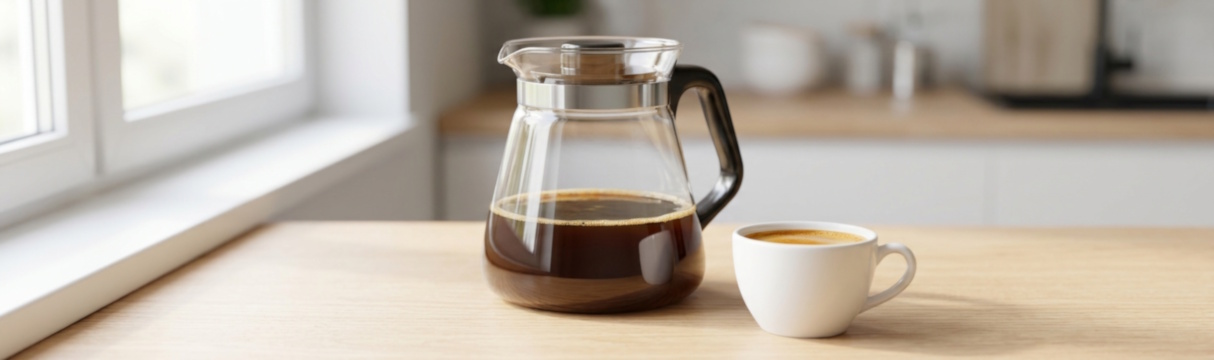
Drip coffee vs americano comes down to one trade-off: drip coffee wins on convenience and per-cup cost, while americano wins on flavor concentration and portion control. Once you know which of those two things you actually care about more on a Tuesday morning, the rest of this comparison just confirms what you already suspected.
If you’ve stood in front of a coffee maker aisle wondering whether a drip machine or a tiny espresso machine actually makes the better daily cup, the honest answer depends on three things: how much caffeine you want, how strong you like it, and how many minutes you’re willing to spend before your first sip. A neighbor of mine switched from a 12-cup drip pot to an espresso machine two years ago and still complains that americanos take longer, but he hasn’t gone back.
For most home kitchens, a dependable drip maker like the Cuisinart DCC-3200 programmable coffee maker covers the daily-pot side of this comparison without much thought. If you want the actual americano experience, though, drip grounds and instant coffee can’t fake an espresso base, and a compact machine like the Breville Bambino espresso machine is realistically the only way to make a real one at home.
Here’s everything this comparison covers, jump to any section:
- What’s the Real Difference Between Drip Coffee and Americano?
- Top Picks at a Glance
- Which Has More Caffeine: Drip Coffee or Americano?
- Taste Breakdown: How Drip Coffee and Americano Actually Compare
- Cost Per Cup: Drip Coffee vs Americano at Home
- How to Make Each One at Home
- Side-by-Side Comparison
- Which One Should You Choose?
- Frequently Asked Questions
- Final Verdict
What’s the Real Difference Between Drip Coffee and Americano?
Drip coffee is made by pouring hot water through a bed of ground coffee and letting gravity pull it through a paper filter. Americano is espresso, one or two concentrated shots pulled under pressure, diluted with hot water afterward. Same starting ingredient, opposite process: one extracts slowly with gravity, the other extracts fast under roughly 9 bars of pressure.
The mechanical difference actually explains almost every other difference on this page. Drip brewing runs water at around 195 to 205°F through medium-ground coffee for 4 to 6 minutes at a ratio of roughly 1:16 (one gram of coffee to sixteen grams of water). That slow, low-pressure contact time is what pulls out the lighter, more acidic notes people associate with drip.
An americano starts as espresso: finely ground coffee packed tight into a portafilter, with water forced through it in 25 to 30 seconds at a ratio closer to 1:2. That short, high-pressure extraction pulls oils and crema that a paper filter simply can’t carry through. Adding 4 to 6 ounces of hot water afterward dilutes the strength without diluting that oily, fuller body, which is the whole point of an americano over just drinking a shot straight.
If you want the deeper mechanical breakdown, including how pump pressure and grind size interact, the espresso machine vs drip coffee maker comparison covers the equipment side in more detail than this drink-focused guide does. For a gentler manual alternative that splits the difference in extraction speed, the pour-over coffee maker guide is worth a look too.
That single mechanical split, gravity versus pressure, is really what this drip coffee vs americano comparison keeps coming back to in every section below.
Water temperature is the other quiet difference in this drip coffee vs americano breakdown. Drip machines heat water to 195-205°F right before contact, while espresso machines run slightly cooler boiler water, typically 190-196°F, since the added pressure during extraction compensates for the lower temperature without scalding the grounds.
Top Picks at a Glance
These are the two machines this guide actually verified for making each drink at home. Full specs, live pricing, and real buyer feedback for both are further down in the how-to-make section. Both picks were verified live specifically for this drip coffee vs americano comparison, not pulled from a generic best-of list.
Between them, these two picks span the realistic drip coffee vs americano price range at home, from $106 for the drip maker to $300 for a machine capable of a real double shot.
| Product | Best For | Rating | Bought/Mo | Buy |
|---|---|---|---|---|
| Cuisinart DCC-3200 | Daily drip coffee, 14 cups at once | 4.4★ (44,181) | 6K+ | Check Price |
| Breville Bambino | Real americanos and espresso at home | 4.0★ (3,250) | 2K+ | Check Price |
How Much Caffeine in an Americano vs Drip Coffee?
The most common question people ask once they’ve settled the taste debate is how much caffeine in an americano compares to a regular cup of drip. The numbers are closer than most assume, and the gap has more to do with cup size than brewing method.
An 8-ounce cup of drip coffee typically runs 95 to 200mg of caffeine, averaging around 150mg. A double-shot americano lands closer to 94 to 150mg, averaging around 126mg. Cup for cup, drip coffee usually edges out americano on total caffeine, mostly because of serving size rather than brewing strength.
Brew ratio changes this more than most people realize. Standard drip coffee uses a 1:16 coffee-to-water ratio, but pushing that to a stronger 1:14 (using more grounds for the same amount of water) can add another 20 to 30mg of caffeine per cup without changing the brew time. Espresso works the opposite way: adding a third shot to your americano adds a fixed, predictable 60 to 70mg rather than a gradual increase, since each shot is pulled to the same 1:2 ratio every time.
That’s the practical answer to the americano vs coffee caffeine question anyone actually brewing at home needs: ratio moves drip, shot count moves americano, and neither one is fixed.
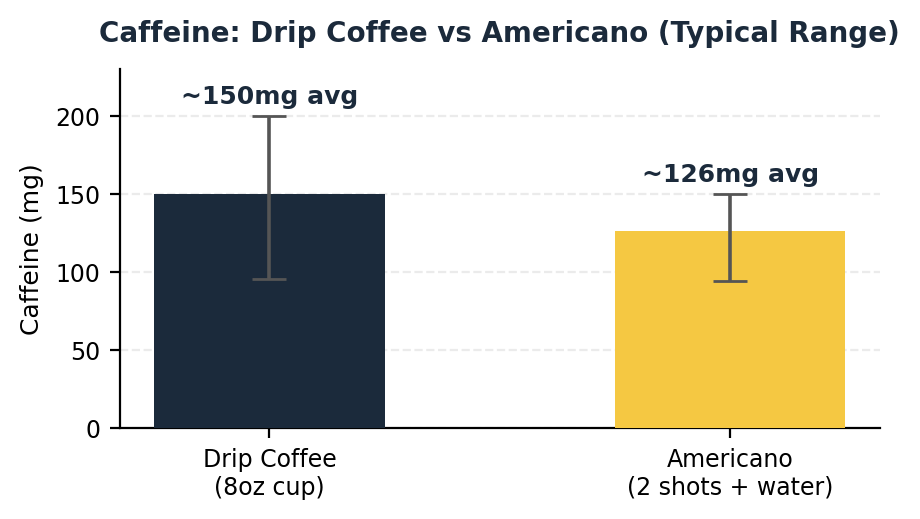
That range is wide for a reason. Robusta beans carry roughly double the caffeine of arabica, so a drip pot made with a robusta-heavy blend can push well past 200mg per cup, while a single-shot americano made from a mild arabica espresso roast might land under 90mg. The variable that actually moves the needle for americano vs coffee caffeine is shot count, not the water you add afterward, since diluting espresso with hot water doesn’t remove any caffeine.
If your daily comparison point is black coffee vs americano specifically (plain drip coffee with nothing added, versus an americano), the caffeine gap narrows even further, since black coffee is just drip coffee without cream or sugar changing the count. The honest takeaway: if caffeine is your only priority, order a bigger cup of drip or add a third shot to your americano. Neither drink has a built-in caffeine advantage large enough to plan your whole morning around.
Taste Breakdown: How Drip Coffee and Americano Actually Compare
Pull the same medium-roast Ethiopian beans through both methods and the difference is obvious within the first sip. The drip version tastes brighter and more acidic, with the fruity, floral notes Ethiopian beans are known for coming through clearly. The americano version tastes noticeably heavier and more chocolatey, with a thicker mouthfeel from the crema that survives the dilution.
Paper filters used in most drip machines trap the coffee’s natural oils, which is exactly why drip coffee finishes clean on the palate instead of coating your tongue. Espresso’s pressure extraction does the opposite: it emulsifies those oils directly into the shot, and diluting with water afterward doesn’t strip them back out. That’s the entire reason an americano tastes closer to espresso than to drip coffee, even though both end up looking like a similar cup of black liquid.
Roast level compounds the difference further. Americanos are usually pulled from medium-dark or dark roasts because those roasts hold up better under high-pressure extraction, which pushes the flavor toward chocolate, caramel, and nut notes. Drip coffee works across the entire roast spectrum, from light to dark, so it’s the more flexible choice if you actually rotate through different bean origins rather than sticking to one espresso blend.
If your comparison point is specifically black coffee vs americano (plain drip with nothing added, versus an americano), that acidity gap is exactly what you’ll notice first. None of it changes the caffeine math from the earlier section, it’s purely a flavor difference.
That covers the taste side of the drip coffee vs americano comparison from first sip to aftertaste.
Grind size is the part most home brewers get wrong on both sides of this comparison. Drip coffee wants a grind roughly the texture of coarse sand, similar to a setting of 20-25 on most burr grinders with a 1-40 scale, while espresso for an americano needs a much finer grind, closer to powdered sugar, usually in the 4-8 range on that same scale.
Using a drip grind in an espresso machine produces a shot that runs too fast and tastes sour and weak, which is the single most common reason a home americano tastes worse than a café’s. If you’re not sure which grinder to start with, the best coffee grinder guide covers options that handle both grind ranges well.
Cost Per Cup: Drip Coffee vs Americano at Home
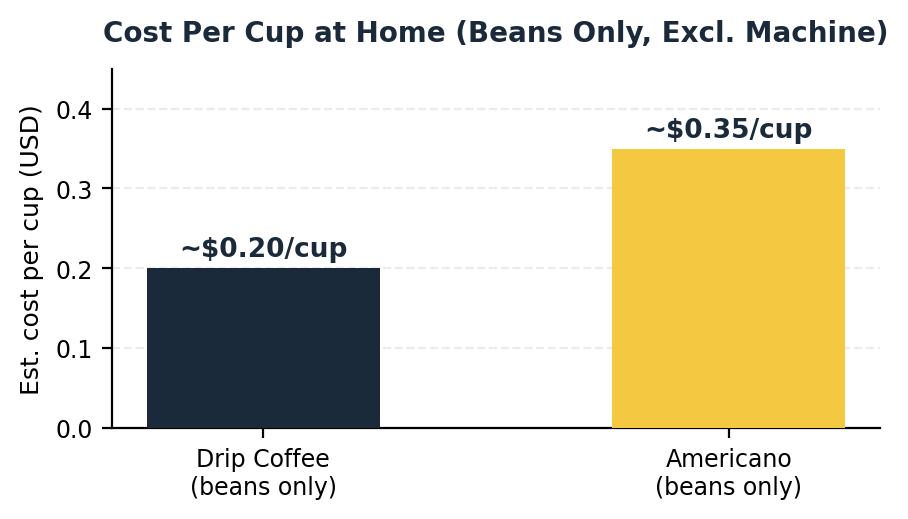
Brewing drip coffee at home runs about 20 cents a cup in beans alone, based on a standard 1:16 ratio and mid-range grocery-store coffee. A home americano costs closer to 35 cents a cup, since espresso uses roughly double the grounds per ounce of finished drink. That 15-cent gap sounds small until you’re making two cups a day, where it adds up to about 55 dollars a year.
The bigger cost question is the machine itself. A solid drip maker like the Cuisinart DCC-3200 runs about $106, while a real espresso machine capable of pulling a proper americano starts closer to $300 with the Breville Bambino. If a café americano runs you $4.50 and you’re buying one five days a week, the Bambino pays for itself in about 13 weeks compared to café prices, even before counting what you’d spend on café drip coffee instead.
None of this accounts for maintenance. Espresso machines need more frequent descaling and portafilter cleaning than drip makers, and replacement parts (steam wands, gaskets) cost more than a drip machine’s carafe or filter basket. If you want the full cost breakdown across brewing methods, not just these two, the coffee maker buying guide walks through long-term ownership costs for every major brewing style.
Machine cost, more than bean cost, is really the deciding factor in most drip coffee vs americano budget decisions.
One drip coffee vs americano cost factor that rarely gets mentioned: electricity. Both machines draw well under $5 a year in power at typical daily use, so it’s genuinely a non-factor next to the machine price and bean cost above.
How to Make Each One at Home
Both drinks are simpler to make at home than most people expect, but the drip coffee vs americano methods need genuinely different equipment. Here’s exactly how to make an americano at home, along with the drip side of the comparison, using the two machines this guide verified.
Cuisinart DCC-3200: Best Drip Coffee Maker for Daily Brewing
| Cuisinart DCC-3200 Specs | |
|---|---|
| Capacity | 14 cups |
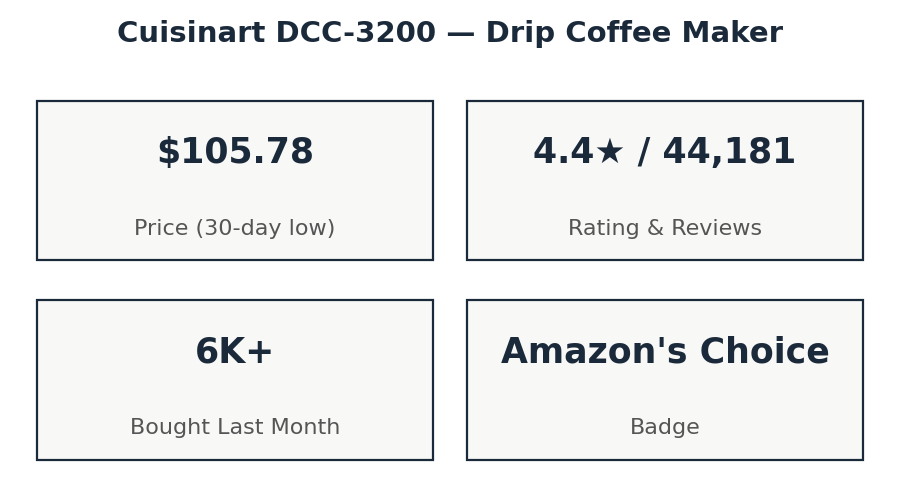
| Price | $105.78 (30-day low) |
| Rating | 4.4★ (44,181 ratings) |
| Bought/Mo | 6K+ |
| Badge | Amazon’s Choice |
The DCC-3200 handles the drip side of this comparison without complications: fill the reservoir, set the 1-4 cup strength control if you’re brewing a partial pot, and let the 24-hour programmable timer handle the rest. Owners who’ve had this exact model for 5 to 8 years report it still brews reliably with no major issues, which says more about long-term value than any single review can.
That kind of long-term reliability is exactly why the DCC-3200 anchors the drip half of this drip coffee vs americano comparison.
For a full 14-cup pot at the standard 1:16 ratio, that works out to roughly 88 grams of medium-ground coffee against 1,400ml of water. Three concrete adjustments actually change the cup: grinding slightly coarser than table salt reduces bitterness if your coffee tastes harsh, dropping to a 1:14 ratio (about 100 grams of grounds for the same water) makes a noticeably stronger pot without over-extracting, and running the machine’s brew-strength button only helps on partial pots since it slows the drip rate rather than changing the ratio.
The recurring complaint worth knowing about before you buy: several verified buyers report open seams underneath the carbon-filter holder that let water drip through the bottom of the machine after repeated use, along with a lid-support arm that can loosen over time. Neither issue is common enough to be a dealbreaker, but check the filter-holder seal periodically if you notice any pooling under the base.
Free delivery available with Amazon Prime
Breville Bambino: Best Espresso Machine for a Real Americano at Home
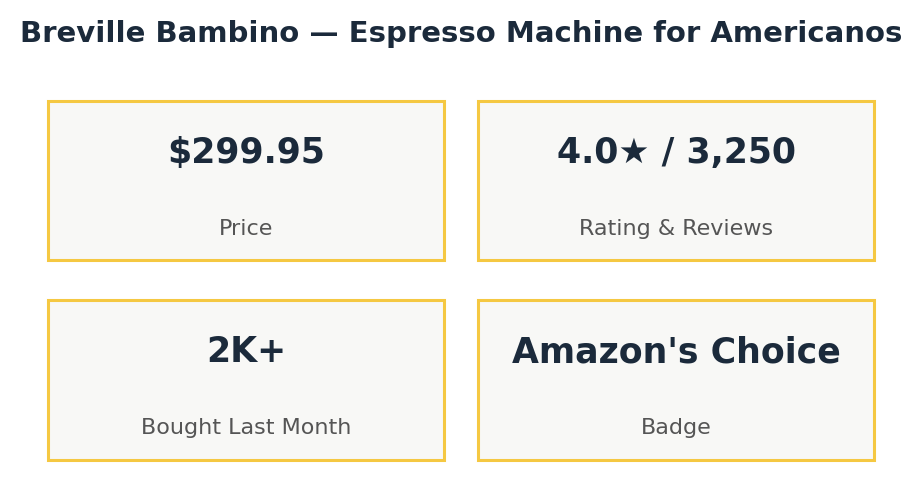
| Breville Bambino Specs | |
|---|---|
| Capacity | 47 fl. oz. water tank |
| Price | $299.95 |
| Rating | 4.0★ (3,250 ratings) |
| Bought/Mo | 2K+ |
| Badge | Amazon’s Choice |
Making an americano on the Bambino comes down to three concrete steps. First, pull an 18-gram double shot to about 36-40 grams of liquid output in 25-30 seconds (the Bambino’s pre-programmed double-shot button gets you close automatically). Second, heat 4-6 ounces of water separately, either through the machine’s hot water function or a kettle.
Third, pour the water into the shot rather than the shot into the water if you want to preserve more of the crema on top. This same double-shot-plus-water logic is what separates a real americano from the drip-coffee-based imitations covered in the types of coffee makers guide.
Follow those three steps in order and you’ll know exactly how to make an americano at home without guessing at ratios or timing.
Reviewers who’ve owned this machine for a year or more consistently praise how quickly it heats up and how consistent the shots are once you’ve learned the grind adjustment. One verified 3-star review specifically flagged the americano experience: water came out over-pressured through the steam wand, the wand itself felt too short for larger cups, and the portafilter felt like lightweight plastic rather than the metal build buyers expected at this price. Weigh that against the far more common 5-star feedback praising fast heat-up and reliable shots before deciding if it’s a dealbreaker for you.
Buyers who ask how much caffeine in an americano before purchasing this machine are usually just gauging whether two shots is enough, and for most people transitioning from drip, it is.
Free delivery available with Amazon Prime
If a $300 espresso machine is more than you want to spend right now, the budget espresso machine guide covers sub-$150 options that can still pull a workable double shot for an americano, just with a steeper learning curve on grind and tamp consistency.
Side-by-Side Comparison
Here’s every factor from this drip coffee vs americano comparison in one table, so you can weigh the two drinks on whatever criteria matters most to your morning.
| Factor | Drip Coffee | Americano |
|---|---|---|
| Caffeine (avg. per cup) | ~150mg (95-200mg range) | ~126mg (94-150mg range) |
| Brew time | 4-6 minutes | 30-90 seconds |
| Body / mouthfeel | Lighter, cleaner finish | Fuller, oilier, more crema |
| Acidity | Higher, brighter notes | Lower, more mellow |
| Cost per cup (beans) | ~$0.20 | ~$0.35 |
| Typical machine cost | $30-$150 | $150-$1,000+ |
| Best for | Large batches, low effort, budget | Espresso lovers, portion control, richer flavor |
Bookmark this table for the next time the drip coffee vs americano decision comes up, since it covers every factor from this guide in one place.
Which One Should You Choose?
If you’ve read this far into the drip coffee vs americano debate and still can’t decide, that’s normal. The two checklists below cover the situations where each drink clearly wins.
Choose Drip Coffee If…
- You’re brewing for more than one person, or want leftovers for later in the morning
- Budget matters more than flavor complexity, both for the machine and per cup
- You rotate through different bean origins and roast levels regularly
- You want to set a timer the night before and wake up to a finished pot
Choose Americano If…
- You already like espresso drinks but want a bigger, less intense cup
- Portion control matters, since a double shot plus water is a fixed, repeatable serving
- You care more about body and crema than about acidity and brightness
- You’re willing to spend more upfront and more time learning grind/tamp technique
That’s the full decision framework for drip coffee vs americano, boiled down to eight concrete criteria instead of a vague gut feeling.
Genuinely can’t decide? A lot of home coffee drinkers end up owning both, using drip for weekday mornings and an americano when they actually want to sit down with it. If neither fits what you’re craving, the cold brew coffee maker guide covers a third option that’s smoother and less acidic than either.
Still shopping for the machine itself rather than the drink? The best drip coffee maker roundup and budget espresso machine guide go deeper on options at every price point, and if you’re weighing capsule machines as a fourth option, the Keurig vs Nespresso comparison and Ninja vs Keurig comparison cover where those fit against both drip and espresso.
Whichever way you lean, this drip coffee vs americano breakdown should make the decision much easier the next time you’re standing in front of the machine.
Frequently Asked Questions
These are the three questions people ask most often once they’ve read this far into the drip coffee vs americano comparison.
Is Americano Stronger Than Drip Coffee?
Americano tastes stronger because of its fuller body and crema, but it isn’t necessarily stronger in caffeine. A double-shot americano averages around 126mg of caffeine, while an 8oz drip coffee averages closer to 150mg.
“Strength” in coffee usually means two different things: perceived intensity of flavor, and actual caffeine content. Americano wins on the first, drip coffee often wins on the second, simply because of serving size. That’s the short version of the drip coffee vs americano caffeine question most people actually want answered.
If you’re specifically comparing black coffee vs americano rather than a milk-based drink, this same caffeine math is the whole story, since black coffee is just drip with nothing added.
How Much Caffeine Is in an Americano Compared to Drip Coffee?
A standard double-shot americano contains roughly 94 to 150mg of caffeine, averaging around 126mg. An 8oz cup of drip coffee ranges from 95 to 200mg, averaging closer to 150mg, mostly because drip servings are typically larger.
Bean type moves both numbers more than the brewing method does. Robusta beans roughly double the caffeine of arabica, so a robusta-based drip pot or a robusta espresso blend can push either drink well outside these typical ranges. That’s the core of the americano vs coffee caffeine question: shot count and bean type decide it, not how much water gets added afterward.
Can You Make an Americano Without an Espresso Machine?
Not a true americano, since it specifically requires an espresso shot as its base. You can approximate the flavor with a moka pot’s concentrated brew diluted with hot water, though the crema and mouthfeel won’t fully match.
Strong drip coffee brewed at a tighter ratio (closer to 1:12 instead of 1:16) and diluted less can get you in the same strength ballpark, but it’s still fundamentally drip coffee, not an americano, in body and taste.
A moka pot substitute is the closest workaround, but it’s not the same as genuinely learning how to make an americano at home with real espresso equipment.
Final Verdict
Drip coffee vs americano isn’t a contest with one universal winner, and anyone who tells you otherwise is selling something. Drip coffee is the better daily default for most households: cheaper equipment, cheaper beans, less cleanup, and more caffeine per serving on average.
Americano earns its higher price and extra effort when you actually want espresso’s body and crema without drinking a straight shot. If that’s the drink you keep ordering at cafés, the Breville Bambino will pay for itself faster than you’d expect. If you just want reliable coffee without thinking about it, the Cuisinart DCC-3200 is the better $106 you’ll spend this year.
Most people who genuinely try both eventually stop treating drip coffee vs americano as an either-or choice, keeping drip for weekday mornings and americano for the days they actually want to sit down with it.
Free delivery available with Amazon Prime on both picks.
Sources on brewing standards and extraction ratios referenced in this guide: Specialty Coffee Association and CoffeeGeek.
As an Amazon Associate, HomeApplianceOwl earns from qualifying purchases. Prices and availability are accurate as of the publish date and are subject to change.