
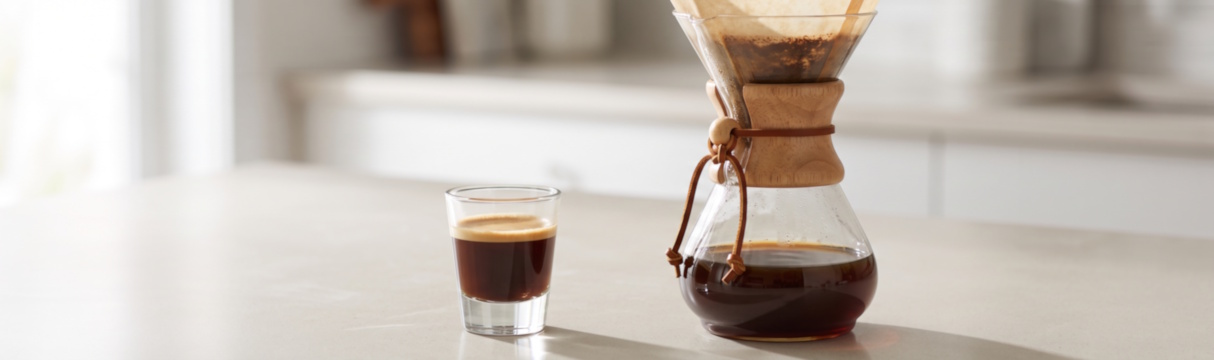
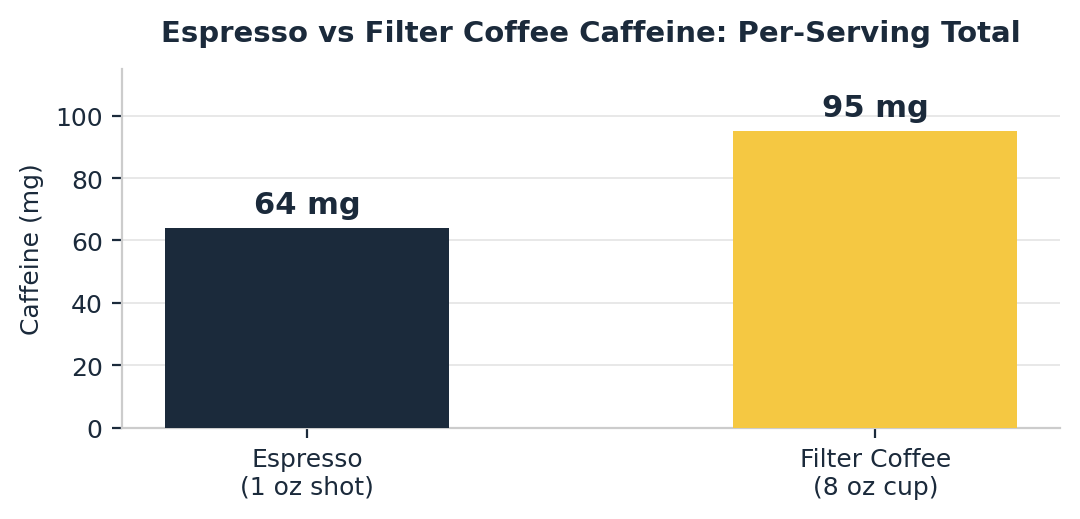
Espresso vs filter coffee caffeine has a clear answer: filter coffee usually wins on total caffeine per cup, even though espresso tastes far stronger, because of how much longer water sits in contact with the grounds. A single 1-ounce espresso shot carries about 64mg of caffeine, while an 8-ounce cup of filter coffee typically carries around 95mg, according to USDA nutrient data. That gap surprises most people, since espresso feels like the harder hit.
If you’re shopping for equipment for either method, the Breville Bambino espresso machine handles the pressurized side well for beginners, and the Chemex Classic 8-Cup pour-over is one of the cleanest ways to brew real filter coffee at home. Both are verified in stock this week, with full pricing and ratings further down this guide. The rest of this article breaks down why the caffeine math flips, what actually changes in your cup, and which method fits your morning.
Table of Contents
- Espresso vs Filter Coffee Caffeine: The Quick Answer
- Caffeine in Filter Coffee vs Espresso: The Real Numbers
- Is Drip Coffee Stronger Than Espresso? Concentration vs. Total Dose
- What to Look For: Choosing Between Espresso and Filter Coffee
- Espresso vs Filter Coffee: Taste, Body, and Brew Time
- Espresso vs Black Coffee: Does the Comparison Change?
- Full Reviews: Best Equipment for Each Brewing Method
- Side-by-Side Comparison
- Which One Should You Choose
- Care and Cleaning Tips
- Frequently Asked Questions
- Final Verdict
Espresso vs Filter Coffee Caffeine: The Quick Answer
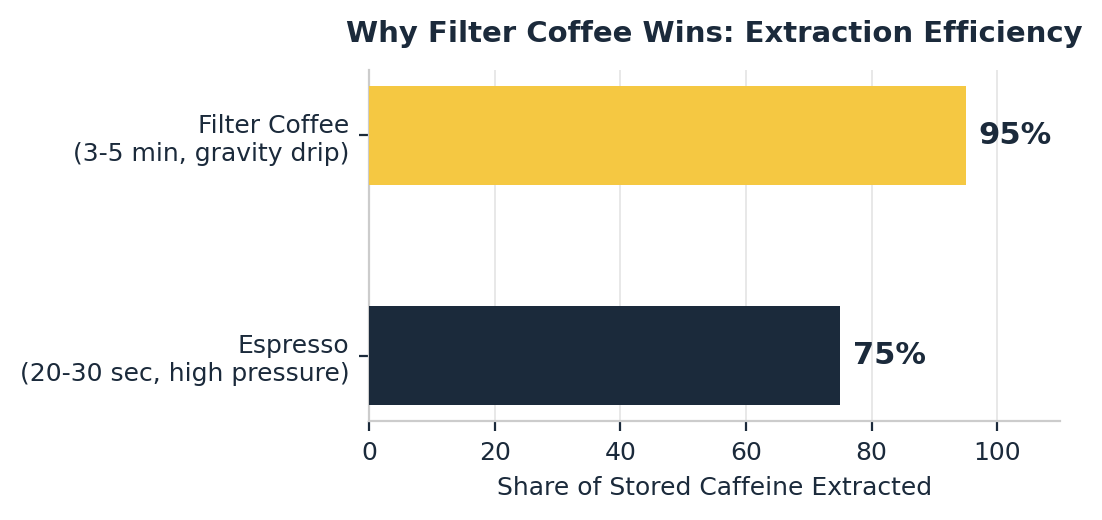
A typical 8-ounce cup of filter coffee delivers more total caffeine (around 95mg) than a 1-ounce espresso shot (around 64mg), even though espresso is roughly five times more concentrated by volume. The reason isn’t the bean or the roast. It’s extraction efficiency: espresso’s 20-to-30-second brew only pulls out about 75% of the caffeine stored in the grounds, while filter coffee’s longer contact time pulls out 95% or more, and the larger serving size compounds the gap.
This is the same math that plays out on a espresso machine vs drip coffee maker comparison, just applied to caffeine instead of cost or convenience. The machine doesn’t decide the winner. The brew ratio, grind, and contact time do.
Keep that distinction in mind for the rest of this espresso vs filter coffee caffeine breakdown: every number below comes down to brew ratio, grind, and contact time, not the brand of machine you use.
Caffeine in Filter Coffee vs Espresso: The Real Numbers
Per USDA nutrient figures, a 1-ounce (30ml) espresso shot averages about 64mg of caffeine, while an 8-ounce (237ml) cup of filter coffee runs anywhere from 70mg to 140mg, averaging around 95mg. By concentration, espresso comes out around 2.1mg of caffeine per milliliter versus roughly 0.4mg per milliliter for filter coffee, which is where the “espresso is stronger” instinct comes from.
Concentration and total dose are two different questions. Nobody orders a 1-ounce cup of filter coffee the way people order a single espresso shot, and that serving-size gap matters as much as the extraction difference. Real-world caffeine comparisons that ignore serving size, like a straight “espresso vs coffee” milligram-per-milliliter chart, quietly mislead readers into thinking espresso delivers more caffeine on an average morning, when the opposite is usually true.
Anyone measuring caffeine in filter coffee vs espresso by concentration alone is answering a different question than the one that actually matters for a daily caffeine count.
Why Extraction Time Changes Everything
Caffeine dissolves into water early in the brewing process, well before most of the coffee’s flavor compounds. A fast, high-pressure espresso shot interrupts that process at 20 to 30 seconds, leaving roughly a quarter of the available caffeine still trapped in the spent grounds, per CoffeeGeek’s breakdown of common espresso myths. Filter coffee’s slower, gravity-driven brew gives water several minutes of contact time, which is enough to pull out nearly all of it.
This also explains a pattern people notice with cold brew coffee makers: an extended steep time, sometimes 12 to 24 hours, pushes extraction even further, which is part of why cold brew concentrate often measures as one of the more caffeinated methods per ounce once it’s diluted back down to drinking strength.
Is Drip Coffee Stronger Than Espresso? Concentration vs. Total Dose
Is drip coffee stronger than espresso? By total caffeine per typical serving, usually yes. By concentration per ounce, no.
A double espresso (about 2oz) can carry 80 to 125mg of caffeine in a tiny volume, but a 12-ounce drip coffee can carry 120mg or more once you account for its much larger pour.
“Strength” also means something different to a barista than it does to a chemist. Flavor-wise, espresso is unmistakably stronger: thicker body, more concentrated bitterness and acidity, and a crema layer that filter coffee never produces. Caffeine-wise, the larger serving usually wins, which is the core confusion behind most Keurig vs Nespresso caffeine debates too, since pod-based machines mostly brew closer to filter-strength extraction despite looking more like a mini espresso machine.
Does Roast Level Change the Answer?
Slightly, but not the way most people assume. Darker roasts lose more mass to moisture and oil during roasting, which concentrates the remaining caffeine per gram of roasted bean, even though the actual caffeine content barely changes bean to bean.
That means a dark-roast espresso and a dark-roast filter coffee, measured gram for gram of grounds, land closer together than a light-roast comparison would. It’s a small effect next to the brew-time and serving-size gaps above, and it’s not a reliable way to chase more caffeine on purpose.
Roast level aside, the underlying question of whether is drip coffee stronger than espresso still comes back to the same two levers: how long the water sits with the grounds, and how much liquid ends up in your cup.
What to Look For: Choosing Between Espresso and Filter Coffee
Picking a brewing method is really picking a grind, a budget, and a morning routine, not just a machine. These four factors decide which side of the espresso vs filter coffee caffeine question actually fits your kitchen.
Grind Size and Grinder Requirements
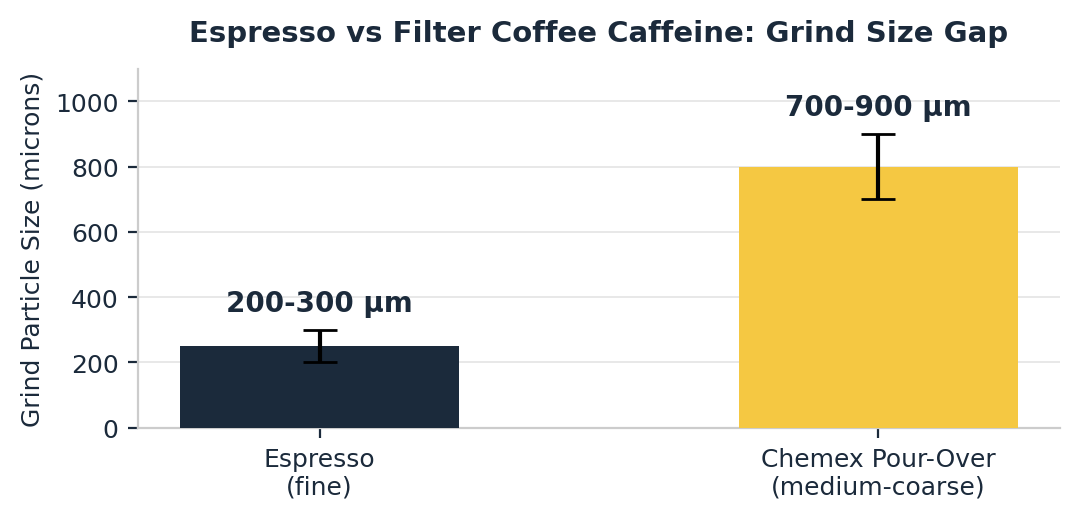
Espresso needs a fine, consistent grind around 200 to 300 microns, fine enough that 9 bars of pressure still takes 20 to 30 seconds to push through the puck. Chemex-style filter coffee needs a noticeably coarser medium-coarse grind, roughly 700 to 900 microns, because the Chemex’s signature thick paper filter already slows water flow on its own; a finer grind on top of that filter will choke the brew and turn it bitter.
Getting the grind wrong is the single most common reason home brewers see inconsistent espresso vs filter coffee caffeine results between batches, even when the beans and dose stay identical.
A single grinder rarely does both jobs well. If you’re buying one machine to cover both methods, check our best coffee grinder picks for a burr grinder with a wide adjustment range, and keep it clean: built-up oil residue skews grind consistency over time, which our coffee grinder cleaning guide covers in more depth.
Equipment Cost and Learning Curve
Espresso machines cost more upfront and demand more technique: dose, tamp pressure, and shot timing all affect the result, which is part of why our budget espresso machine guide exists as its own topic. Pour-over filter brewers like the Chemex cost far less and have almost no learning curve beyond pouring water slowly and evenly.
If neither manual method appeals to you, our full coffee maker buying guide walks through automatic drip machines and pod systems that split the difference on convenience.
Espresso vs Filter Coffee: Taste, Body, and Brew Time
Espresso vs filter coffee isn’t only a caffeine question. The two methods produce genuinely different drinks, and understanding why helps explain the caffeine gap too.
Espresso’s 9-bar pressure emulsifies the coffee’s natural oils directly into the shot, producing the thick, syrupy body and golden crema that define the drink, per the Specialty Coffee Association’s own brewing parameters for a standard shot. Filter coffee’s paper filter strips most of those oils out, leaving a lighter, cleaner-tasting cup with more clarity between individual flavor notes. Neither texture is objectively better; they’re built for different moments.
Brew time compounds the difference. Espresso finishes in under 30 seconds start to finish, while a Chemex pour-over typically runs 3 to 4 minutes from first pour to final drip. That’s also most of the reason an Americano exists in the first place: it’s an attempt to stretch espresso’s concentration and small serving size closer to filter coffee’s volume by adding hot water after the shot, not before.
If you’d rather skip pour-over technique entirely but still want a paper-filtered cup, a French press is the closest immersion-style alternative, though its metal mesh filter lets more oils through than a Chemex’s paper does, landing somewhere between the two on body.
None of that changes the espresso vs filter coffee caffeine numbers directly, since body and mouthfeel come from oils and solids, not caffeine itself.
Espresso vs Black Coffee: Does the Comparison Change?
Espresso vs black coffee is really the same espresso vs filter coffee caffeine comparison wearing a different name. “Black coffee” almost always means filter or drip coffee served without milk or sugar, so the same 64mg-versus-95mg math applies directly.
Where it gets confusing is milk-based espresso drinks. A cappuccino or latte still contains the same espresso shot as a straight espresso, plus steamed milk that adds volume and flavor but no meaningful caffeine. Ordering a large latte doesn’t give you more caffeine than a straight double shot unless the barista added extra shots, so the “bigger drink equals more caffeine” instinct that correctly applies to filter coffee doesn’t hold for milk-based espresso drinks.
If you’re weighing convenience alongside caffeine, our best coffee makers for beginners roundup covers which machines make this whole decision easier for a first-time buyer, espresso or filter.
Full Reviews: Best Equipment for Each Brewing Method
Both products below were verified live at New York, NY 10001 delivery, with current pricing, ratings, and real buyer feedback pulled directly from their Amazon listings.
Getting real numbers for espresso vs filter coffee caffeine also depends on using equipment that’s actually built for the method, not just whatever coffee maker happens to be on the counter already. A mismatched grind or an underpowered machine throws off the extraction percentages covered earlier just as much as the brew method itself.
Breville Bambino: Best Espresso Machine for This Comparison
| Breville BES450BSS Bambino Espresso Machine | |
| Price | $299.95 |
| Rating | 4.0★ (2,626 ratings) |
| Bought/Mo | 2K+ |
| Badge | Amazon’s Choice |
| Water Tank | 47 fl oz |
| Dimensions | 13.7″D x 6.3″W x 12″H |
The Bambino covers everything a real espresso shot needs: a 9-bar pump, a 3-second heat-up, and an automatic steam wand for microfoam. Its compact footprint fits under most standard cabinets, which matters more than spec sheets suggest once you actually try to fit an espresso machine on a counter.
Amazon reviewers report the machine performs reliably for roughly a year of regular use before some units stop heating or steaming correctly, per a verified 3-star Amazon review describing the unit no longer “brewing correctly or steaming correctly” after about 11 months. That’s a real pattern worth knowing before you buy, not a dealbreaker, since most buyers in the 4- and 5-star range never mention it.
A consistent tamp and fresh grind matter here too, since an inconsistent dose is one of the fastest ways to throw off espresso vs filter coffee caffeine expectations shot to shot.
Free delivery available with Amazon Prime
Chemex Classic 8-Cup: Best Filter Coffee Brewer for This Comparison
| Chemex Pour-Over Glass Coffeemaker, Classic 8-Cup | |
| Price | $48.94 |
| Rating | 4.8★ (8,729 ratings) |
| Bought/Mo | 2K+ |
| Badge | None currently listed |
| Capacity | 40 fl oz (8 cups) |
| Material | Non-porous borosilicate glass, dishwasher safe |
The Chemex is as close to zero-technique filter coffee as it gets: coarse grounds, a thick proprietary paper filter, and a slow pour. That thick filter is exactly what pulls nearly all the available caffeine into the cup while also stripping out the oils that carry cafestol, a compound some research links to raised cholesterol in unfiltered coffee.
Amazon reviewers report inconsistent glass quality across individual units. Verified 3-star reviews describe thinner-than-expected glass with visible seam imperfections, and a pouring lip that isn’t perfectly uniform, which can leave drips down the outside if you don’t wipe it immediately after pouring.
None of that affects the caffeine in filter coffee vs espresso math covered earlier; it’s a build-quality note, not a brewing one.
Free delivery available with Amazon Prime
Looking for a pour-over device beyond the Chemex specifically? Our full pour-over coffee maker roundup compares several filter brewers side by side, including options with thinner filters that shift the caffeine and flavor balance slightly.
Side-by-Side Comparison
Since this comes down to two specific products, here’s the direct comparison in a where-to-buy layout rather than a repeated row-by-row table. The caffeine in filter coffee vs espresso figures below match the numbers covered earlier, lined up next to price and rating for a quicker gut-check.
Use this table as the short version of the full espresso vs filter coffee caffeine breakdown above if you’re ready to buy and just want the numbers side by side.
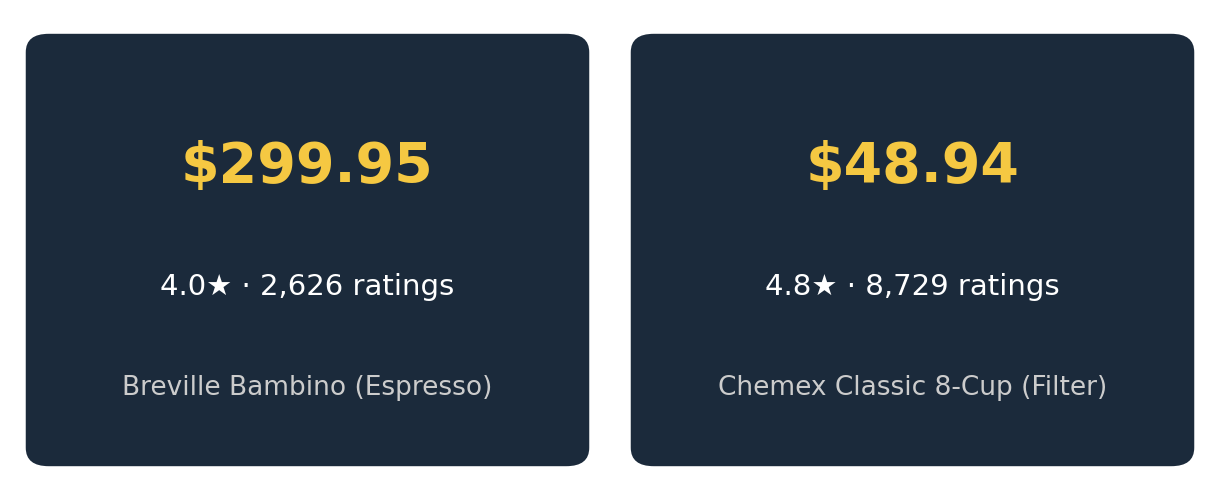
| Breville Bambino (Espresso) | Chemex Classic 8-Cup (Filter) |
| $299.95 · 4.0★ (2,626) · Amazon’s Choice · 2K+ bought/mo | $48.94 · 4.8★ (8,729) · No badge listed · 2K+ bought/mo |
| ~64mg caffeine per 1oz shot, ~75% extraction | ~95mg caffeine per 8oz cup, ~95%+ extraction |
| 20-30 second brew, fine grind required | 3-4 minute brew, medium-coarse grind required |
| Check Price on Amazon | Check Price on Amazon |
Which One Should You Choose
Whether is drip coffee stronger than espresso actually matters to your decision depends on what you’re optimizing for: a quick, concentrated hit or a bigger cup with more total caffeine and a gentler learning curve.
There’s no wrong answer to espresso vs filter coffee caffeine here, just a tradeoff between speed, equipment cost, and total dose.
Choose Espresso If
- You want a small, fast, concentrated shot rather than a large mug.
- You drink milk-based drinks like lattes or cappuccinos regularly.
- You don’t mind a steeper learning curve and more counter space.
Choose Filter Coffee If
- You want the most total caffeine per cup for the least effort.
- You prefer a lighter body and cleaner, more distinct flavor notes.
- You’d rather spend under $50 than several hundred dollars on equipment.
Plenty of coffee drinkers land on both, using an espresso machine on weekends and a Chemex on weekday mornings when there’s less time for milk steaming and cleanup. If neither manual method feels right yet, our types of coffee makers overview maps out every brewing category, automatic included, before you commit to one.
Care and Cleaning Tips
Keeping both machines clean matters for consistent espresso vs filter coffee caffeine results too, not just flavor. A scaled-up boiler or an oily, stale grinder both throw off extraction in ways that shift your actual caffeine numbers from one brew to the next.
Descale the Breville Bambino’s water tank every 2 to 3 months with a citric-acid-based descaling solution, more often if your tap water is hard. Backflush the group head weekly with plain water using the included blind filter basket to clear built-up coffee oils that otherwise turn rancid and taint future shots.
The Chemex needs less maintenance but still benefits from attention. Hand-wash the glass with a soft brush rather than an abrasive scrubber, since the borosilicate glass can pick up fine scratches that eventually make it harder to see coffee oil buildup on the interior walls. Replace the wood collar’s leather tie only if it dries out or cracks; it isn’t load-bearing and won’t affect the brew.
A clean brewer is part of getting reliable espresso vs filter coffee caffeine numbers cup after cup, whichever method you stick with.
Frequently Asked Questions
Does Espresso Have More Caffeine Than Filter Coffee?
No, not per typical serving. Espresso has more caffeine per ounce, but filter coffee’s larger serving size and higher extraction efficiency usually give it more total caffeine per cup.
A 1oz espresso shot averages around 64mg, while an 8oz filter coffee averages around 95mg. Drink two or three espresso shots back to back, though, and the total caffeine easily exceeds a single cup of filter coffee.
The same logic applies to espresso vs black coffee specifically, since black coffee is simply filter coffee served without milk or sugar.
Is Filter Coffee Healthier Than Espresso?
Neither is automatically healthier; the two drinks share most of the same compounds. Filter coffee’s paper filter does trap more cafestol, a compound some studies link to raised LDL cholesterol, while espresso and other unfiltered methods let more of it through.
Serving size, added sugar or cream, and total daily caffeine intake likely matter more than the brewing method itself. Anyone with a specific cholesterol or caffeine-sensitivity concern should check with a healthcare provider rather than choosing a brew method based on this alone.
Why Does Filter Coffee Have More Caffeine If Espresso Tastes Stronger?
Taste and caffeine content measure two different variables. Espresso tastes stronger because it’s more concentrated by volume, packing more flavor compounds and caffeine into a smaller amount of liquid.
Filter coffee’s longer brew time extracts a higher percentage of the caffeine actually stored in the grounds, and its larger serving size adds even more on top of that. The two effects compound, which is why the milder-tasting drink usually ends up with more total caffeine.
That’s the entire explanation behind espresso vs filter coffee caffeine confusion in one sentence: strength and dose aren’t the same measurement.
Final Verdict
Espresso vs filter coffee caffeine isn’t close once you account for serving size and extraction: filter coffee delivers more total caffeine in nearly every real-world cup, even though espresso tastes and feels stronger. Neither drink is the “correct” choice. The right pick depends on whether you want a fast, concentrated shot or a larger, gentler cup that happens to carry more caffeine.
If you remember one thing from this espresso vs filter coffee caffeine breakdown, make it this: the stronger-tasting drink isn’t automatically the more caffeinated one.
That holds whether you’re comparing straight espresso vs black coffee or weighing a full lineup of milk-based drinks against a pour-over carafe.
For espresso, per our live verification the Breville Bambino remains a solid beginner-friendly pick at $299.95 with a 4.0★ rating across 2,626 reviews. For filter coffee, the Chemex Classic 8-Cup is hard to beat at $48.94 with a 4.8★ rating across 8,729 reviews.
As an Amazon Associate, this site earns from qualifying purchases made through the links above, at no extra cost to you.